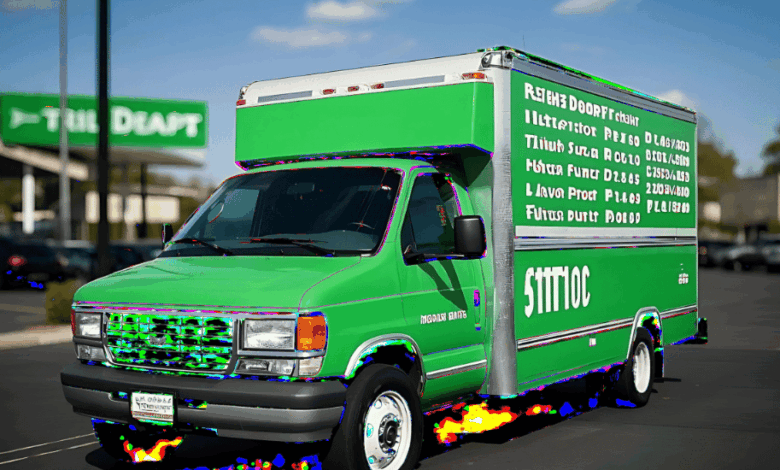
Home Depot truck rental typically costs $19 for the first 75 minutes in a flatbed or cargo van and about $29 for the first 75 minutes in a 12-foot box truck, with no per-mile fee on any vehicle in Home Depot’s own fleet. After that, you pay a fixed amount for each extra 15 minutes until the charge reaches the vehicle’s daily rate. Expect a refundable deposit of around $150 on a major credit card, and plan to show a driver’s license and proof of your own auto insurance.
Rates and rules are set locally and change over time, so treat the figures below as a guide and confirm with your store. This page covers the rate structure, every common fee, the requirements that get people turned away at the desk, how to estimate fuel, realistic cost examples, and when Penske or U-Haul is the better deal.
Home Depot Truck Rental Rates by Vehicle
Home Depot’s own fleet is parked at most stores and is designed for material runs, store pickups and small local moves. According to Home Depot’s published rental terms, there is no additional mileage fee: you pay for time, not distance.
| Vehicle | First 75 minutes | Space (approximate) | Load limit (approximate) | Towing |
|---|---|---|---|---|
| 8 ft flatbed | $19 | Open 8 ft bed | About 3,000 lbs | Hitch at many stores |
| 10 ft flatbed | $19 | Open 10 ft bed | About 3,000 lbs | Hitch at many stores |
| Pickup truck (select areas) | $19 | 8 ft bed, seats three | About 2,200 lbs | Varies |
| Cargo van | $19 | Enclosed, about 10.5 ft deep | About 3,000 lbs | No |
| 12 ft box truck | About $29 | Enclosed, roughly 500 cu ft | About 3,800 lbs | No |
How the Extended Rate Works
After the first 75 minutes, the meter adds a fixed charge every 15 minutes. At stores that use the capped structure, the running total stops once it reaches the daily rate, so a long rental will not cost more than a full day. A full day usually means 24 hours from checkout, and some stores also offer weekly rates for longer projects. Ask the desk how your store handles the cap before you drive off, because policies can differ.
Same-Store Returns Only
Home Depot vehicles must go back to the store where you picked them up. There are no one-way Home Depot rentals, and returning elsewhere can bring significant penalties. If your move ends in a different city, you need Penske or U-Haul.
Requirements: What Gets People Turned Away
- Age 21 or older for every vehicle in the fleet.
- A valid US or Canadian driver’s license. No commercial license is needed for anything Home Depot rents.
- A major credit card in your name. Home Depot’s terms say cash and debit cards are not accepted for the initial deposit, which is typically around $150 and refundable. This is the most common reason renters are sent home.
- Proof of current personal auto insurance. Some state exceptions exist, but bring your insurance card. Call your insurer and ask about the specific vehicle, because some policies cover pickups and vans but not box trucks.
- Identity verification. Many stores now run a digital identity check (Home Depot uses CLEAR) before handing over keys. Allow extra time on your first rental.
Every Fee You Might Pay
| Charge | Typical range | When it applies |
|---|---|---|
| Security deposit | Around $150, refundable | Held on a credit card at pickup, released after return |
| Damage protection (optional) | Roughly $15 to $25 per rental day | Reduces your liability for damage to the vehicle |
| Fuel replacement | Well above pump price per gallon | If you return with less fuel than at pickup |
| Late return | Extra 15-minute increments or another day | Past the agreed return time |
| Cleaning | Roughly $25 to $100 | Mulch, soil, spills or debris left behind |
| Furniture pads and dollies | Roughly $10 to $20 each | Rented separately at the tool rental desk |
| Wrong-location return | Set locally, can be substantial | Vehicle not returned to the original store |
Home Depot expects the vehicle back with the same fuel level it left with. Photograph the fuel gauge and odometer before you leave; that one photo settles most disputes.
How to Budget for Fuel
Fuel is the cost most rate cards leave out, and it can rival the rental itself on longer trips. Check current prices in your region with the US Energy Information Administration’s weekly fuel survey, which breaks out gasoline and diesel by region. Prices on the West Coast, and California in particular, usually run well above the national average, while the Gulf Coast is typically cheapest.
The math is simple: divide your round-trip miles by the truck’s fuel economy, then multiply by the local price. Box trucks often manage somewhere around 8 to 12 mpg, and vans and pickups more. For example, a 90-mile round trip at 8 mpg uses about 11 gallons; at $4 a gallon that is about $45, and at $6 a gallon (a plausible diesel price in some regions) about $68. Home Depot’s own vehicles run on gasoline, while Penske’s larger trucks are usually diesel, which often costs more per gallon.
Penske Trucks Booked Through Home Depot
For anything bigger than the 12-foot box truck, Home Depot refers customers to Penske. These are conventional moving trucks booked in advance, and the pricing works differently: local rentals charge per mile, while one-way rentals come with a per-trip quote that includes mileage.
| Penske truck | Typical move size | Local rental? | One-way? |
|---|---|---|---|
| Cargo van | Studio or single items | Yes | No |
| 12 ft | Studio or one bedroom | Yes | Yes |
| 16 ft | One to two bedrooms | Yes | Yes |
| 22 ft | Two to three bedrooms | No | Yes |
| 26 ft | Four bedrooms or more | Yes | Yes |
That gap at 22 feet surprises people. Penske’s own rental comparison lists the 22-footer for one-way moves only, so a local round trip means choosing between a 16-foot and a 26-foot truck. One-way quotes can look high next to a local day rate, but they include mileage and spare you driving an empty truck back. Penske offers discounts to groups such as AAA members and the military, and booking directly makes it easier to apply them; compare quotes both ways.
Worked Cost Examples
These estimates use gasoline at about $4 a gallon and diesel at about $6. Adjust with your local prices.
| Job | Vehicle | What you pay for | Estimated total |
|---|---|---|---|
| Pick up a sofa 10 miles away, back within 75 minutes | Cargo van | $19 base plus about 2 gallons of gas | About $25 to $30 |
| Haul mulch, pavers and fence panels, about 3 hours | 8 ft flatbed | $19 base, extra 15-minute increments, 2 to 3 gallons | About $55 to $75 |
| One-bedroom move across town, half a day | 12 ft box truck | $29 base, increments up to the daily cap, fuel, damage waiver | About $80 to $120 |
| Three-bedroom move, 45 miles each way, one day | Penske 26 ft (diesel) | Base rate, per-mile charges, about 12 to 13 gallons diesel, waiver, dollies | About $275 to $375 |
What Fits in Each Vehicle
- Flatbeds: full sheets of plywood and drywall laid flat, 8-foot lumber, 30 to 40 bags of soil or mulch, or a washer and dryer. A pallet of pavers or concrete hits the weight limit long before you run out of room, so check weights. For big outdoor jobs, such as the base prep in our guide to artificial grass costs and whether to buy, the 10-foot flatbed can save several trips.
- Pickup: choose it when you need seats for helpers rather than maximum payload.
- Cargo van: best for anything that must stay dry, like a mattress, dresser and a stack of boxes. Measure tall items; the rear opening limits upright appliances.
- 12 ft box truck: one to two rooms, large appliances or project hauls. With no mileage charge, several shuttle runs across town cost only time and fuel.
Home Depot vs Penske vs U-Haul
| Provider | Entry price | Mileage | One-way | Best for |
|---|---|---|---|---|
| Home Depot flatbed or van | $19 for 75 minutes | No mileage fee | No | Material runs and store pickups |
| Home Depot 12 ft box truck | About $29 for 75 minutes | No mileage fee | No | Small moves within one city |
| U-Haul local | Advertised from about $19.95 per day | Charged per mile | Yes | Longer local days, widest network |
| Penske local | Quoted per rental | Charged per mile | Not applicable | 16 ft and 26 ft local moves |
| Penske one-way | Per-trip quote | Included | Yes | Interstate moves, towing a car |
Home Depot wins clearly for short local trips because there is no mileage fee. U-Haul’s local daily rate looks similar on paper, but per-mile charges add up on a 30 to 50-mile day. For one-way, interstate or larger moves, book Penske or U-Haul directly. Lowe’s truck rentals vary widely by store and do not follow a single published national rate, so call your local store if you want to compare.
Ways to Cut the Cost
- Bring a credit card, not a debit card, plus your license and insurance card.
- Stage everything before the clock starts. Disassemble furniture and have items at the curb.
- Rent midweek. Weekends and month-end, when leases turn over, are the busiest times.
- Check your existing coverage before buying the damage waiver; some auto policies and credit cards already cover rented vans and pickups.
- Size up only when it saves a trip. A bigger diesel truck burns more fuel; two runs in a gasoline truck may cost less locally.
- Compare delivery. For a single appliance or pallet bought at Home Depot, paid or free delivery can beat a rental once fuel and your time are counted.
- If you are moving between states, the truck is only one line in a bigger budget; our guide to what to consider before moving to another state covers the costs that catch people out. And for projects spread over several weekends, grouping material runs alongside your other seasonal home improvement projects means renting once instead of five times.
How to Book
Home Depot fleet: reserve online in the truck rental section or at the tool rental desk. A store may have only a few vehicles, so call ahead on busy days. Penske: use the link from Home Depot’s moving truck pages or book directly. Reserve in advance and confirm the pickup location, which is often a Penske facility rather than the store.
At pickup and return: photograph all sides, the cargo area and the fuel gauge, refuel to the starting level, sweep out the cargo area and keep your receipt.
The Bottom Line
For short local jobs, Home Depot’s $19/$29 first-75-minutes rate with no mileage fee is hard to beat — provided you bring a credit card, your license and insurance, and return the truck to the same store. Budget for fuel and the deposit, photograph everything at pickup, and switch to Penske or U-Haul for anything one-way, interstate or bigger than a 12-foot box truck.
This is general information, not financial advice. Rental rates, fees and requirements vary by store and change over time, so confirm details before you book.
Frequently Asked Questions (FAQs)
How much does it cost to rent a truck from Home Depot?
Flatbeds, pickups and cargo vans typically start at $19 for the first 75 minutes, and the 12-foot box truck at about $29. Extra time is billed in 15-minute increments up to a daily rate that varies by store.
Does Home Depot charge by the mile?
No. Home Depot’s own vehicles have no mileage fee; you pay for time. Penske trucks booked through Home Depot’s referral do charge per mile on local rentals.
Can I use a debit card to rent a Home Depot truck?
Home Depot’s terms say cash and debit cards are not accepted for the deposit, so bring a major credit card in your name. The deposit is typically around $150 and refundable.
Can I return a Home Depot truck to a different store?
No. Home Depot rentals must be returned to the store where you picked them up. For one-way moves, use Penske or U-Haul.
Is Home Depot cheaper than U-Haul?
For short local trips, usually yes, because Home Depot has no mileage fee. For all-day, one-way or larger moves, U-Haul or Penske booked directly is often the better value.
What should I photograph at pickup?
All sides of the vehicle, the cargo area, the fuel gauge and the odometer. Those photos settle most disputes about damage or fuel level at return.