If your phone is dying and you have forgotten your cable, you no longer have to hunt for an electronics shop: quick-commerce apps such as Swiggy Instamart now deliver charging cables and power banks in as little as 10 minutes in many Indian cities. The trick is ordering the right accessory, because a cheap cable or a mismatched power bank can charge slower than the one you left at home. This guide explains what to look for, which popular options suit which phones, and how to get genuinely fast charging from a 10-minute order.
Why 10-minute delivery works so well for chargers
Charging accessories are small, standardised and usually needed urgently, which makes them a natural fit for quick commerce. A few common situations where a 10-minute order saves the day:
- You are working from a café, co-working space or hotel and your cable has frayed or gone missing.
- You are leaving for a long train or bus journey tonight and need a backup power bank.
- You have bought a new phone that came with a USB-C to USB-C cable but no charging brick, and your old cables do not fit.
- A child’s tablet or your earbuds need a different connector from everyone else’s devices.
Availability, stock and delivery times vary by city, pin code and time of day, so check the app before you rely on it for something critical.
Fast charging basics in plain language
Charging speed depends on three things working together: the charger or power bank, the cable and the phone. The slowest of the three sets the speed.
- Watts (W): The headline number. A basic charger offers 10W to 12W, while fast chargers range from about 18W to 100W or more.
- USB Power Delivery (PD): The common fast-charging standard used by most modern Android phones, iPhones from the iPhone 8 onwards (with the right cable) and many laptops.
- Cable rating: Most USB-C cables are rated for 3A, which supports up to 60W. Cables rated for 5A (often sold as 100W or 240W) are needed for the highest speeds on some phones and laptops.
- Proprietary systems: Some brands use their own fast-charging systems, which may only reach full speed with the brand’s own charger and cable.
Do not forget the charging brick
Many new phones ship without a wall adapter, and an old 5W or 10W USB-A brick will cap your speed no matter how good the cable is. If you are ordering a new USB-C cable, check whether you also need a USB-C PD adapter. For most phones, a 20W to 30W PD charger is the practical sweet spot; laptops typically need 45W to 65W or more. A charger with both a USB-C and a USB-A port is useful when you still have a mix of older and newer cables at home, and a compact GaN charger saves space in a travel bag.
Fast-charging cables you can order in minutes
Samsung 1m Type-C to Type-C cable
For Galaxy owners, the original Samsung C to C cable is the safest choice because it is made to work with Samsung’s own chargers and phones. Samsung’s standard 1m cable is a 3A cable, which comfortably covers the 25W “Super Fast Charging” that most Galaxy phones use. If you have a model that supports 45W charging, check that you are buying a 5A version to get full speed. The cable also works with other USB PD phones, tablets and earbuds.
Braided 60W or 100W USB-C cables
Brands such as boAt sell braided USB-C to USB-C cables rated at 60W or 100W. The braiding helps the cable survive being stuffed into bags, and the 100W versions can charge many laptops as well as phones. If you share one cable between a laptop and a phone, a 100W-rated cable is the more flexible buy.
2-in-1 micro-USB and Type-C cables
Households with older devices (Bluetooth speakers, budget earphones, older phones) still need micro-USB. A 2-in-1 cable with both connectors, such as those sold by Xiaomi, keeps one cable in the bag instead of two. These are usually aimed at everyday charging rather than maximum wattage.
USB-C to Lightning for older iPhones
iPhone 15 and newer models use USB-C, but earlier iPhones use Lightning. For fast charging on those, you need a USB-C to Lightning cable paired with a PD charger of 20W or more. Look for Apple’s own cable or an MFi-certified one to avoid compatibility warnings.
Power banks worth keeping in your bag
boAt Energyshroom PB310 (10,000mAh, wireless)
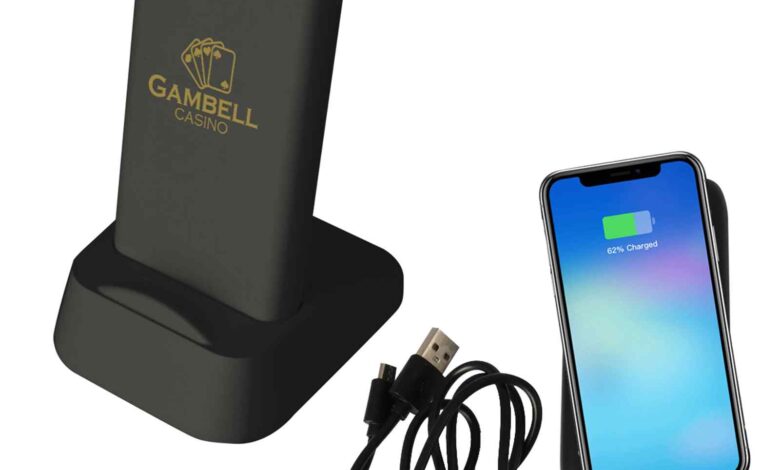
The boAt wireless power bank in the Energyshroom range is listed with 10,000mAh capacity, 15W wireless charging and up to 22.5W wired output across dual ports. The wireless pad is handy when you do not have the right cable to hand, while the wired ports are faster. It suits phones that support Qi or MagSafe-style wireless charging; for phones without wireless charging, you simply use the wired ports.
Slim 10,000mAh power banks at 18W to 22.5W
Brands like Realme, Xiaomi and Ambrane sell slim 10,000mAh power banks with two-way fast charging, usually in the 18W to 22.5W range. They are light enough for a pocket or small bag and will typically recharge a phone one and a half to two times.
20,000mAh power banks for travel
For long journeys, festivals or power-cut-prone areas, a 20,000mAh model with 20W or higher PD output gives several phone charges or a partial tablet charge. The trade-off is weight, often around 350 to 450 grams.
Quick comparison: which one should you order?
| Your situation | What to order | Why |
|---|---|---|
| Samsung Galaxy phone | Samsung original C to C cable | Reliable 25W Super Fast Charging with Samsung chargers |
| Phone plus laptop | 100W braided USB-C cable | One cable covers both devices |
| Older gadgets in the house | 2-in-1 micro-USB and Type-C cable | Works across device generations |
| Daily commute | Slim 10,000mAh power bank | Light, pocketable, one to two phone charges |
| Phone with wireless charging | boAt Energyshroom PB310 | Cable-free top-ups plus fast wired ports |
| Long trips | 20,000mAh PD power bank | Several charges between wall sockets |
How to avoid fakes and poor-quality accessories
- Buy branded, from a reputable seller: Very cheap unbranded cables often lack proper wiring for fast charging and can overheat.
- Check the BIS mark on power banks: Power banks sold in India are expected to carry Bureau of Indian Standards certification.
- Read the output rating: A power bank’s capacity (mAh) tells you how much it stores; the watts tell you how fast it delivers.
- Inspect on delivery: Check packaging, seals and the product itself when it arrives, and use the app’s support if anything looks wrong.
Tips to make your battery last longer
Fast accessories help, but good habits reduce how often you need them. Lower screen brightness, turn off location for apps that do not need it, and close background-heavy apps. Our list of iPhone apps worth downloading includes a few that help manage everyday phone use. Avoid leaving your phone in a hot car or on a sunny dashboard, since heat is one of the main causes of long-term battery wear. Many phones also offer an optimised or adaptive charging setting that slows charging near 100% overnight.
If you are interested in how larger batteries work at home, our guide to the best batteries for solar systems covers the same capacity and output ideas on a much bigger scale.
Flying with a power bank
Power banks must go in cabin baggage, never checked-in luggage. Under common international airline rules, batteries up to 100Wh are generally allowed without special approval; a 10,000mAh power bank is roughly 37Wh and a 20,000mAh one roughly 74Wh. Rules on using power banks during the flight have tightened with many airlines and regulators, so check your airline’s current policy before you travel.
Frequently asked questions
Can I really get a charging cable delivered in 10 minutes?
In many Indian cities, yes. Quick-commerce apps like Swiggy Instamart stock popular cables and power banks, though exact delivery times and stock depend on your location.
Does any USB-C cable support fast charging?
Not always. Most good USB-C cables handle up to 60W, but some phones and laptops need a 5A cable for their top speed, and very cheap cables may charge slowly.
What size power bank should I buy?
A 10,000mAh power bank suits daily use and gives around one and a half to two phone charges. Choose 20,000mAh for long trips or multiple devices.
Is wireless charging from a power bank slower?
Usually, yes. Wireless charging is convenient but less efficient than a wired connection, so use the wired port when you need the fastest top-up.
Can I take a power bank on a flight?
Generally yes, in cabin baggage only, and usually up to 100Wh without approval. Check your airline’s current rules, as some restrict using power banks during flights.