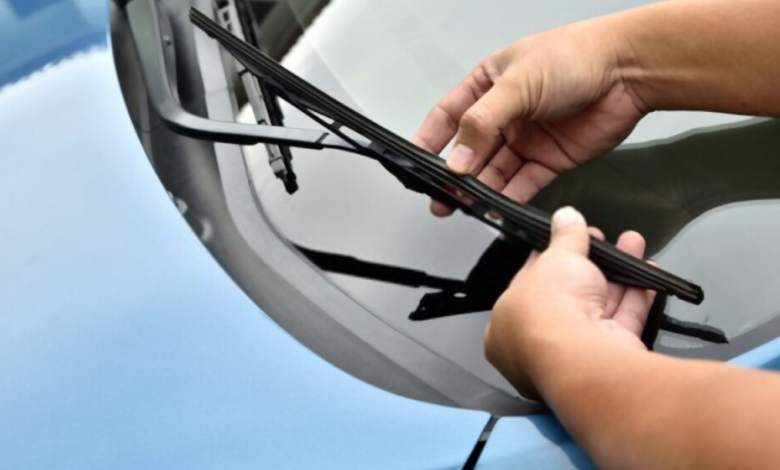
To use your windshield wipers effectively, match the wiper speed to how hard it is raining, always use washer fluid rather than running blades over dry glass, clear ice and snow by hand before switching the wipers on, keep the blades and glass clean, and replace the blades roughly every six to twelve months or as soon as they streak, skip or chatter. Those few habits make a noticeable difference to visibility, which is one of the simplest safety improvements any driver can make.
Below you will find how the wiper system works, the settings most cars offer, practical tips for rain, snow and bugs, how to clean the blades properly, and how to tell when it is time for new ones.
How windshield wipers work
Most cars have two front wiper arms, and many hatchbacks and SUVs have a single rear wiper. An electric motor drives a linkage that sweeps the arms back and forth. Each arm has a spring that presses a rubber (or silicone) blade against the glass, and the edge of that blade squeegees water off the windshield. When the rubber edge hardens, cracks or rounds off, it can no longer make clean contact, and that is when streaks and smears appear.
Understanding your wiper settings
| Setting | What it does | When to use it |
|---|---|---|
| Mist / single wipe | One sweep each time you push the stalk | Light spray from other vehicles, occasional drizzle |
| Intermittent | Wipes with a pause, often adjustable | Light or on-and-off rain |
| Auto (rain-sensing) | A sensor near the mirror adjusts speed to rainfall | Changing conditions, if your car has it |
| Low | Continuous, steady sweeps | Moderate, steady rain |
| High | Continuous, fast sweeps | Heavy rain, highway spray, slush |
| Washer | Sprays fluid and wipes a few times | Dust, pollen, road salt, bugs |
Check your owner’s manual, since stalk layouts differ between brands. On many cars with rain-sensing wipers, a small dial on the stalk adjusts how sensitive the sensor is.
Tips for using wipers effectively
1. Match the speed to the conditions
Too slow and water builds up between sweeps; too fast on light rain and the blades drag across glass that is barely wet, which causes chatter and wear. Wipers are designed to work at every road speed, including highway speeds, so use high whenever the rain calls for it. Many states require headlights to be on whenever your wipers are running, so it is a good habit to switch them on together.
2. Never run wipers on a dry windshield
Dry rubber grabs and drags across glass. Any grit on the windshield gets pushed along, which can leave fine scratches, and the blade edge wears faster. The motor also works harder. If you need to clear dust or bird droppings, use the washer fluid first and let the wipers run with it.
3. Keep washer fluid topped up
Use a proper windshield washer fluid rather than plain water. It cleans better, and winter blends resist freezing. In cold climates, switch to a winter fluid rated well below your typical low temperatures before the first freeze. Avoid dish soap, which can leave residue and may not be good for paint or rubber.
4. Clear ice and snow before turning wipers on
Using wipers to break up ice can tear the rubber and strain the motor or linkage. Start the car, turn on the defroster, and use an ice scraper and brush to clear the glass. Check that the blades are not frozen to the windshield before switching them on. Many drivers in snowy regions lift the wiper arms off the glass overnight when snow or freezing rain is expected, though this is not recommended for every car, so check your manual. Always switch the wipers off before you shut down the car in winter, so they do not try to move against ice the next time you start it.
5. Deal with bugs and road film quickly
Dried insects and oily road film smear rather than wipe. Wash the windshield by hand at fill-ups using a glass cleaner, and consider a bug-removing washer fluid in summer. A clean, smooth windshield is also what allows the blades to do their job.
6. Consider a water-repellent treatment
Glass treatments cause rain to bead and roll off, especially at speed, which can improve visibility in heavy rain. Apply them to clean, dry glass following the product directions. Some drivers find they cause chatter with certain blades, so try them and see how your car responds.
7. Do not forget the rear wiper
On hatchbacks, wagons and SUVs, the rear window collects spray and dirt quickly because of the way air flows off the back of the vehicle. Use the rear wiper and washer whenever the rear view gets hazy, and replace that blade on the same schedule as the front ones. It is easy to overlook because you do not look through it as often.
8. Protect blades from heat and sun
Heat and UV exposure are among the biggest causes of hardened, cracked rubber. Parking in shade or a garage, and using a windshield sunshade in summer, can help blades last longer in hot regions.
How to clean windshield wiper blades
- Lift each wiper arm away from the windshield. Hold it, as a spring-loaded arm that snaps back can crack the glass.
- Dampen a clean microfiber cloth or paper towel with washer fluid or a mild soap solution.
- Pinch the rubber edge in the cloth and run it gently from one end to the other. Repeat until the cloth comes away clean.
- Wipe with a cloth dampened with plain water, then lower the arm gently.
- Clean the windshield itself, including the strip at the base of the glass where the wipers rest.
Doing this every few weeks, and before long road trips, removes the grit that wears blades and causes streaks. Avoid harsh solvents and abrasive brushes, which can damage the rubber.
When to replace your wiper blades
A common rule of thumb is every six to twelve months, and sooner in hot, sunny climates where UV breaks rubber down quickly, or in places with harsh winters. Replace them right away if you notice:
- Streaks or a hazy film left after each sweep
- Skipping or chattering across the glass
- Squeaking even when the glass is wet and clean
- Cracked, split or hardened rubber
- A bent frame or blade that no longer sits flat on the glass
Worn blades are not just annoying. Poor visibility is a real safety risk, and a crash in bad weather is exactly the kind of situation that leads to a claim. If that ever happens, this guide on how to file a car insurance claim after an accident walks through the steps.
Choosing new wiper blades
| Blade type | Pros | Considerations |
|---|---|---|
| Conventional (bracket) | Lowest cost, widely available | Frame can ice up in winter |
| Beam (bracketless) | Even pressure, good in snow, sleek look | Costs more |
| Hybrid | Beam-style performance with a covered frame | Mid to upper price range |
| Winter blades | Rubber boot keeps ice out of the frame | Best swapped out in warm months |
Check your owner’s manual or a retailer’s fit guide for the correct length for each side, as the driver and passenger blades are often different sizes, and confirm the connector type. Auto parts stores, big-box retailers and online marketplaces all sell blades, and many stores will help install them. Drivers in India, for example, can find a wide range of blades on automotive marketplaces such as Carorbis. Installation usually takes a few minutes with no tools.
Wipers are part of safe driving habits
Good visibility works together with slower speeds and longer following distances in bad weather. If you are a new driver, these tips for passing your driving test include checking lights and wipers before you set off, and a car tracking device is another tool some drivers use for peace of mind.
Frequently asked questions
Is it bad to use wipers on a dry windshield?
Yes. Dry blades drag across the glass, wear out faster and can push grit that scratches the windshield. Always spray washer fluid first.
How often should I replace wiper blades?
Roughly every six to twelve months, or sooner if they streak, skip, squeak or show cracked rubber.
Can I use wipers at highway speeds?
Yes. Wipers are designed to work at all normal driving speeds. Use the high setting in heavy rain or spray, and slow down when visibility is poor.
Why do my new wipers streak?
Usually because the windshield has road film, wax or bug residue on it. Clean the glass thoroughly with a glass cleaner, then wipe the new blades. Also check that the blade is the right size and seated correctly.
Should I use water instead of washer fluid?
Washer fluid is better. It cleans more effectively, and winter formulas resist freezing. Plain water can freeze in the reservoir and lines in cold weather.


