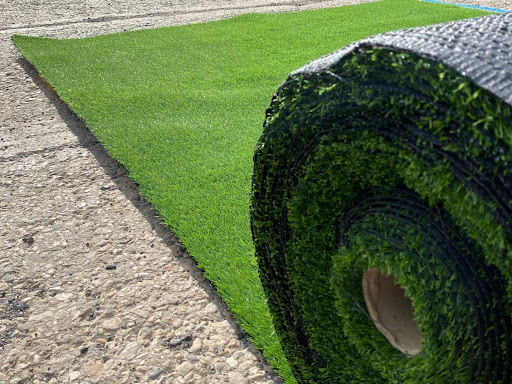
Artificial grass typically costs roughly $5 to $20 per square foot installed in the US, depending on turf quality, how much site preparation your yard needs, and local labor rates. It is worth buying if you want a green, low-maintenance lawn in a dry climate, a shady spot where real grass struggles, or a durable surface for kids and pets. Buy it from a supplier that shows real samples, explains the warranty in writing, and can install it (or advise you properly if you plan to do it yourself).
That is the short version. Below we break down what drives the price, the honest pros and cons, how to judge whether it suits your property, and what to ask before you sign with a supplier.
How much does artificial grass cost?
There is no single price, because two projects of the same size can differ a lot in preparation and product. It helps to think in two parts: the turf itself, and everything that goes under and around it.
| Cost component | Typical range (per sq ft) | What affects it |
|---|---|---|
| Turf material only | About $2 to $8 | Pile height, blade shape, face weight, backing, brand |
| Base preparation | About $1 to $5 | Removing old sod, grading, crushed rock or decomposed granite base, drainage |
| Infill | Often under $1 | Silica sand, coated sand, crumb rubber, or pet-specific infill |
| Labor and extras | Varies widely | Access, curves and edging, seams, removal of debris, local wages |
| Installed total | Roughly $5 to $20 | All of the above combined |
These are broad ranges, not quotes. Prices vary by region and change over time, so get at least three written estimates for your exact area. Small, awkward spaces often cost more per square foot than a large rectangle because cutting, seaming and edging take the same effort regardless of size. For a deeper look at how contractors build up a quote, this breakdown of artificial grass cost factors is a useful reference to compare against the estimates you receive.
Upfront cost versus long-term cost
Artificial grass is usually more expensive than seeding or laying sod on day one. The savings come later: little or no irrigation, no mowing, no fertilizer or weed-and-feed, and no reseeding bare patches. How quickly those savings add up depends on your water rates, how much you currently spend on lawn care, and how long the turf lasts. Many products are marketed with a lifespan in the range of 10 to 20 years, with heavy use, strong sun and pets on the lower end.
In drought-prone parts of the West and Southwest, some water utilities have offered rebates for replacing thirsty lawns. Rules differ: some programs pay for native or drought-tolerant plants but exclude synthetic turf. Check your local utility’s current terms before assuming you qualify.
Should you buy artificial grass?
It is a good fit for some yards and a poor one for others. Weigh these honestly before you commit.
Advantages
- Low maintenance. No mowing, edging or fertilizing. Occasional brushing, leaf blowing and rinsing are usually enough.
- Water savings. A real advantage in areas with watering restrictions or high water bills.
- Year-round color. It stays green through drought, heat waves and winter dormancy.
- Works where grass will not. Deep shade, slopes that are hard to mow, narrow side yards, rooftops and balconies.
- No mud. Useful for dog runs and play areas.
Disadvantages
- Heat. In direct summer sun, synthetic turf can get much hotter than natural grass, enough to be uncomfortable for bare feet and paws. Lighter colors, cooling infills and shade help but do not remove the issue.
- Higher upfront cost than seed or sod.
- Environmental trade-offs. It is made from plastics, supports no soil life or insects, and is hard to recycle at end of life. Some communities have debated or restricted it over concerns about chemicals and microplastics.
- Odors with pets if drainage is poor or it is not rinsed regularly.
- It still wears. High-traffic areas can flatten, and cheap products may fade.
For a balanced overview of these trade-offs from a design perspective, see this piece on the pros and cons of artificial grass: https://www.architecturaldigest.in/content/pros-cons-artificial-grass/
A quick decision guide
| Your situation | Artificial grass is likely… |
|---|---|
| Hot, dry climate with watering limits | A strong option (plan for heat) |
| Shady yard where grass keeps dying | A strong option |
| Dogs that turn the lawn to mud | A good option with pet infill and good drainage |
| You enjoy gardening and want pollinators | Probably not the best choice; consider native plants |
| Full-sun yard used mainly on summer afternoons | Think carefully about surface heat |
| Short-term rental or plan to move soon | Payback may be too slow |
Before you buy, check any homeowners association rules and local ordinances. Some states, including California, limit how far HOAs can ban water-wise landscaping, but approval steps may still apply. If you are still planning the overall layout of your outdoor space, our guide to home and garden setup can help you decide where turf, planting beds and hardscape should go.
How to choose the right turf
Ask for physical samples and compare them outside in sunlight. Key specifications to look at:
- Pile height: Shorter piles (around 1 to 1.5 inches) are easier to clean and suit pets and play; taller piles look lusher but can mat down.
- Face weight: The amount of yarn per square yard. Higher usually means denser and more durable, though blade shape matters too.
- Backing and drainage: Look for perforated or fully permeable backing, especially if you have pets.
- Thatch layer: Curly brown or tan fibers near the base make the turf look more natural and help blades stand up.
- UV stability and warranty: A written warranty against fading and wear, ideally with clear terms on what is and is not covered.
Where to buy artificial grass
You have three main routes, each with trade-offs.
Specialist turf installers
Local companies that supply and install turf usually offer the best results and the clearest accountability, since they handle the base, drainage and seams. Expect the highest total price, but also a workmanship warranty.
Home improvement stores
Big-box retailers sell rolls and some offer installation through partners. This is convenient for small areas and DIY projects, though the product range may be narrower than at a specialist.
Online retailers and wholesalers
Buying online can lower material costs, but you cannot inspect the product first unless samples are offered, and shipping heavy rolls adds up. Returns can be difficult once turf is cut.
Questions to ask any supplier
- How long have you been installing turf locally, and can I see finished jobs or speak to past customers?
- What base materials and depth will you use, and how will water drain?
- What is included in the quote (removal, disposal, edging, infill, cleanup)?
- What does the product warranty cover, and is there a separate labor warranty?
- Are you licensed and insured as required in my state?
Check reviews on more than one platform and be wary of quotes far below the others; skipping proper base preparation is the most common way corners get cut, and it leads to lumps, puddles and seams that lift.
DIY or professional installation?
A handy homeowner can install a small, flat area such as a balcony or dog run. Larger lawns involve removing sod, compacting several inches of base with a plate compactor, cutting and seaming heavy rolls, and spreading infill evenly. Mistakes show quickly. Many people find professional installation worth it for anything beyond a few hundred square feet. If turf is one of several outdoor jobs on your list, see our roundup of home improvement projects to do this spring for timing ideas.
Caring for artificial grass
- Remove leaves and debris with a leaf blower or plastic rake.
- Brush against the grain every few weeks in busy areas to lift the fibers.
- Pick up pet waste promptly and rinse the area; use an enzyme cleaner for odors.
- Keep grills, fire pits and reflective windows from focusing heat on the turf, since it can melt.
- Top up infill if blades start to lie flat.
Looking for more ideas for your home? Browse our Home Improvement category, or read about essential appliances for a cozy and functional home.
Frequently asked questions
How much does artificial grass cost for a 500 square foot yard?
Using a rough installed range of $5 to $20 per square foot, a 500 square foot yard could cost somewhere around $2,500 to $10,000. Your actual price depends on turf quality, site preparation and local labor, so get several written quotes.
How long does artificial grass last?
Many products are sold with an expected life of roughly 10 to 20 years. Strong sun, heavy foot traffic and pets tend to shorten it, while good installation and regular care help it last.
Is artificial grass good for dogs?
It can be, as long as it has permeable backing, good drainage and a pet-friendly infill, and you rinse it regularly. Watch surface heat on sunny days and provide shade.
Does artificial grass get hot?
Yes. In direct sun it can become much hotter than natural grass. Shade, lighter-colored turf, cooling infills and a quick rinse with water can reduce the surface temperature.
Is it cheaper than real grass in the long run?
It can be, mainly through lower water and lawn care costs, but it costs more upfront. The payback period depends on your local water rates, what you spend on maintenance now, and how long the turf lasts.


