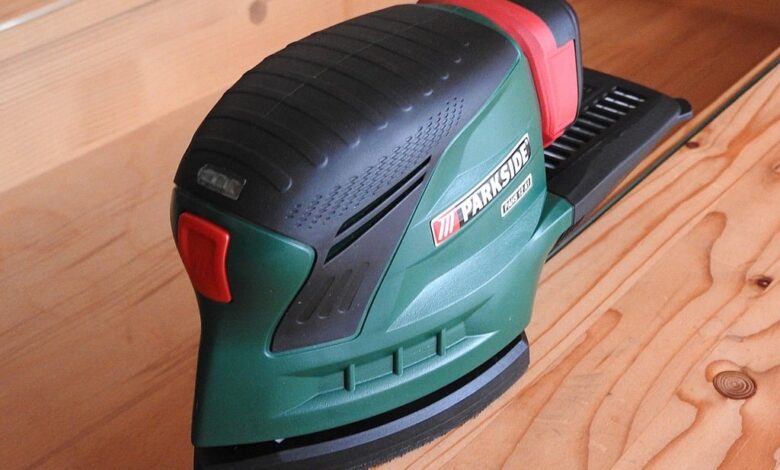
A random orbital sander is the easiest way for most DIYers to get a smooth, swirl-free finish on wood, and the GARVEE model is a budget-friendly option aimed at home projects and light trade use. It combines variable speed, a random orbit pattern and an assortment of sandpaper grits in the box, so you can go from rough stock to a paint-ready surface with one tool. Below is what the sander offers, how to use it well and how it compares with other types of sanders.
What the GARVEE electric sander offers
The GARVEE electric random orbital sander is a corded, palm-grip tool built for general woodworking, furniture refinishing and prep work before painting. Based on the product listing at the time of writing, its main features include:
- Variable speed: several speed settings covering roughly 4,000 to 10,000 orbits per minute, plus a boost or turbo setting for faster stock removal.
- 3/16-inch orbit: a common orbit size that balances material removal with a fine finish.
- Low vibration design: a balanced motor intended to reduce hand fatigue and help avoid swirl marks.
- Light weight: listed at under 5 pounds, which makes it manageable for overhead or vertical work in short stretches.
- Included sandpaper: a starter set of hook-and-loop discs spanning coarse, medium, fine and very fine grits.
Specifications and bundles can change between production runs, so confirm pad size, dust collection style and warranty details on the listing before you buy.
Who this sander suits best
The GARVEE sander makes the most sense for homeowners, hobby woodworkers and handypeople who want one reliable tool for a range of weekend jobs without paying premium-brand prices. Its speed range lets you slow down for delicate veneer and speed up for stripping old finishes, and the bundled paper means you can start work the day it arrives.
- Good fit: furniture flips, cabinet and trim prep, deck and fence touch-ups, craft projects and general renovation.
- Worth weighing: corded tools limit mobility on big outdoor jobs, and budget models may not match the dust extraction or long-term durability of professional sanders used all day, every day.
If you mainly sand in short sessions and value low vibration and easy disc changes, it covers the essentials well. Keep a spare pack of discs in your most-used grits (usually 80, 120 and 220) so a project never stalls halfway through.
How a random orbital sander works
A random orbital sander spins its round pad while also moving it in a small offset loop (the “orbit”). Because the pattern never repeats exactly, individual abrasive grains do not travel the same path twice, and that is what prevents the swirl marks you get from simpler orbital or rotary tools. The result is fast material removal with a finish that usually only needs a light pass at a finer grit before stain, oil or paint.
The orbit size matters. A larger orbit removes material faster but can leave a slightly coarser scratch pattern; a smaller orbit is slower but finer. At 3/16 inch, the GARVEE sits in the middle, which suits most household jobs.
Choosing the right grit
The included discs cover most projects, but knowing which grit to reach for saves time and sandpaper. A general guide:
| Grit range | Use it for | Example jobs |
|---|---|---|
| 40 to 60 (coarse) | Heavy removal and stripping | Old paint or varnish, deep scratches, rough-sawn boards |
| 80 to 120 (medium) | Smoothing and leveling | Removing coarse scratches, shaping edges, general prep |
| 150 to 240 (fine) | Final prep and between coats | Pre-stain sanding, scuffing primer or finish |
| 320 to 400 (very fine) | Polishing and ultra-smooth finishes | Final passes on clear coats, fine furniture |
Work through the grits in steps without skipping more than one level. Jumping from 60 straight to 220, for example, leaves deep scratches that the fine paper cannot remove, and they show up clearly once stain goes on.
Step-by-step: getting a fine finish
- Prepare the surface. Set protruding nails, fill holes with wood filler and let it dry fully.
- Attach the disc. Line up the dust holes on the paper with those on the pad and press it firmly onto the hook-and-loop backing.
- Start on the surface. Place the pad flat on the wood before switching on to avoid gouges, and switch off before lifting.
- Let the tool do the work. Use light, even pressure; pushing down slows the random action and can cause swirls.
- Move slowly. Travel roughly an inch per second in overlapping passes, keeping the pad flat.
- Clean between grits. Vacuum or wipe off dust before moving to the next finer grit so loose grains do not scratch the surface.
- Check your work. Shine a light low across the surface or wipe with mineral spirits to reveal scratches before finishing.
Use a lower speed for thin veneers, edges and softer woods, and higher speeds for hardwood and paint removal. The turbo setting is handy on large, flat panels, but ease off near corners and edges where it can round over the profile.
Random orbital vs. sheet and detail sanders
| Type | Pad shape | Strengths | Weaknesses |
|---|---|---|---|
| Random orbital | Round, hook-and-loop discs | Fast, swirl-free, versatile | Cannot reach into square corners |
| Sheet (finishing) sander | Square or rectangular, uses cut sheets | Cheap paper, gets closer to edges | Slower, can leave swirl patterns |
| Detail (mouse) sander | Triangular | Corners, trim, small spaces | Too slow for large surfaces |
| Belt sander | Continuous belt | Very aggressive removal | Easy to gouge, not for fine finishing |
For most homeowners, a random orbital sander is the one to buy first. Add a detail sander later if you do a lot of trim, window frames or furniture with tight corners.
Project ideas around the house
An orbital sander earns its place quickly once you start using it. Popular jobs include refinishing a thrift-store dresser, smoothing a butcher block countertop before oiling it, prepping kitchen cabinet doors for paint, sanding a deck railing and building kids’ furniture or a treehouse where splinter-free edges matter. It is also useful for scuffing glossy surfaces so primer sticks. If you are repainting rooms this year, our guide on what to consider when repainting walls covers the prep steps, and these spring home improvement projects offer more ideas where a sander helps.
Building your own storage is another good use. Sanding cut edges and faces before finishing makes DIY pieces like floating shelves above the toilet look store-bought.
Safety and maintenance
- Wear safety glasses, hearing protection and a dust mask or respirator. Fine wood dust irritates the lungs and some species are known sensitizers.
- If you are sanding paint in a home built before 1978, test for lead first. Sanding lead paint releases hazardous dust and calls for EPA lead-safe practices.
- Connect a shop vacuum to the dust port when you can; it captures far more dust than a bag and helps the paper last longer.
- Empty the dust canister often and never leave sanding dust in a closed bag near heat, especially after sanding oil finishes.
- Replace worn discs promptly. Clogged or smooth paper generates heat, burns wood and makes the motor work harder.
- Blow dust out of the vents occasionally and check the cord and hook-and-loop pad for wear.
What to look for when buying any orbital sander
Whether you choose GARVEE or another brand, compare these points: variable speed control, orbit size, weight and grip comfort, how well dust collection works, the cost and availability of replacement discs in your pad size, cord length and warranty. Read recent user reviews for comments on vibration and durability, since those vary most between budget models. For occasional home use, a well-reviewed budget sander is often all you need; if you sand daily for work, it may be worth paying more for a premium model with better dust extraction.
Frequently asked questions
What is a random orbital sander used for?
It is used to smooth and prepare wood, painted surfaces, some plastics and metal. The random motion removes material quickly while leaving a finish without swirl marks.
What speed should I use on an orbital sander?
Use lower speeds for veneers, edges and soft woods, and higher speeds for hardwoods and paint removal. Test on scrap first if you are unsure.
Can I use an orbital sander on drywall?
You can for small patches with fine grit and light pressure, but it creates a lot of dust. For large areas, a pole sander or a dedicated drywall sander with vacuum extraction works better.
Why is my orbital sander leaving swirl marks?
Common causes are pressing too hard, skipping grits, clogged paper or debris trapped under the pad. Use light pressure, step through grits and clean the surface between passes.
How often should I change the sanding disc?
Change it when it stops cutting well, feels smooth, clogs or starts burning the wood. Worn paper wastes time and can damage the surface.