1. A Brief History of Single Board Computers
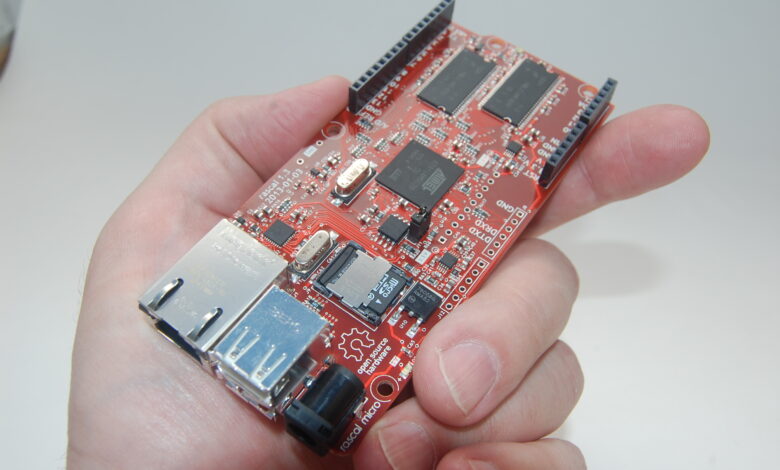
Single board computers (SBCs) originated in the mid-1970s with the introduction of the first microprocessors. Initially, computers were expansive and costly, composed of multiple separate components including processors, memory, and input/output devices. Technological advancements soon enabled the integration of all essential components onto a single, compact circuit board, leading to the birth of SBCs.
1.1 The Origins of Single Board Computers
The roots of single board computers trace back to the 1975 release of the Altair 8800 — one of the first commercially successful personal computers. This pioneering device featured a single circuit board comprising the processor, memory, and I/O interfaces, ushering in the SBC revolution.
Over the decades, SBCs have become more powerful and adaptable, serving diverse industries ranging from education and research to industrial automation and the rapidly expanding Internet of Things (IoT) ecosystem.
1.2 Milestones and Innovations in Single Board Computers
Key innovations in SBCs include the 2012 launch of the Raspberry Pi, a cost-effective, credit card-sized computer aimed at promoting computer science education worldwide. Its low price and versatility popularized SBCs among hobbyists and educators alike.
Advances in ARM architecture further revolutionized SBCs by introducing energy-efficient, low-power models ideal for IoT applications. Industry leaders such as Raspberry Pi, NVIDIA, and Qualcomm offer ARM-based SBCs with remarkable processing capabilities housed in compact designs.
1.3 Impact of Single Board Computers on the Technology Industry
SBCs have profoundly transformed the technology industry by democratizing access to affordable computing power. This accessibility has fueled unprecedented innovation, enabling individuals and organizations to create tailored solutions effectively and efficiently.
Moreover, SBCs are pivotal to the proliferation of IoT devices. Their small footprint, energy efficiency, and internet connectivity capabilities make them ideal for developing smart home automation, industrial monitoring, and control systems, fostering a more connected and intelligent world.
2. Advantages and Applications of Single Board Computers
SBCs offer significant benefits over traditional PCs and laptops, including compactness, energy efficiency, and affordability. These features make SBCs highly suitable for various innovative and practical applications:
2.1 Compact Size and Portability
The small size of SBCs—often as compact as a credit card—enables easy portability and seamless integration into a wide array of devices and systems. Examples include portable media players, custom gaming consoles, digital signage, automotive electronics, drones, and wearable gadgets.
2.2 Versatile Uses in Various Industries
The versatility of SBCs spans multiple sectors like industrial automation, home automation, healthcare, and scientific research. In industrial environments, they enable process monitoring and real-time data analysis, boosting operational efficiency and productivity.
In healthcare, SBCs empower medical devices such as patient monitors and imaging systems, facilitating real-time vital sign tracking and remote medical diagnostics with enhanced reliability.
2.3 Cost-Effective Solutions for DIY Enthusiasts
DIY enthusiasts and makers favor SBCs for their affordability and adaptability, providing an accessible platform for custom projects and prototypes. For instance, a Raspberry Pi can power a smart home system integrating sensors, actuators, and web servers for remote control of lighting, appliances, and security.
Additionally, educational institutions utilize SBCs to enhance learning in programming and computer science, offering budget-friendly tools that inspire students and foster creativity.
3. Future Trends in Single Board Computers
The SBC landscape is poised for continued evolution, driven by advances in processing power, AI and machine learning integration, and innovative form factors and connectivity options.
3.1 Advancements in Processing Power and Performance
Modern SBCs boast multicore CPUs, high-speed memory, and advanced graphics, enabling them to execute complex tasks such as video processing, machine learning inference, and virtual reality applications. These improvements open doors to usage in autonomous vehicles, robotics, and high-performance computing clusters.
3.2 Integration of Artificial Intelligence and Machine Learning
The integration of AI and ML into SBCs enables real-time data analysis and intelligent decision-making. SBCs equipped with AI capabilities can perform sophisticated tasks like image and speech recognition, natural language processing, and predictive analytics, greatly expanding their applications in autonomous systems, healthcare diagnostics, and smart city infrastructure.
3.3 Exploration of New Form Factors and Connectivity Options
Emerging demand for SBCs suitable for wearable tech, IoT edge devices, and embedded systems is driving innovation in form factor design. Connectivity enhancements including 5G, Wi-Fi 6, and Bluetooth 5 adoption are expanding SBC usability by supporting faster data transfers and lower latency for next-generation applications.
Additional Insight: Single board computers are increasingly integral to edge computing paradigms, where decentralized processing close to data sources minimizes latency and bandwidth use. By embedding SBCs in edge nodes, industries like manufacturing, healthcare, and smart cities can achieve real-time analytics and rapid responsiveness. This decentralization enhances system resilience and enables scalable IoT deployments, positioning SBCs at the forefront of future digital infrastructure advancements, driving the next wave of innovation in distributed computing and connected ecosystems. Future Workplace Innovations is a useful companion read here.
4. How Single Board Computers are Shaping the Future
Single board computers are instrumental in shaping the future of computing and technology by fueling IoT growth, transforming education, and accelerating innovation and prototyping.
4.1 Empowering IoT and Connected Devices
With billions of IoT devices projected globally, SBCs provide the essential processing power and connectivity for diverse connected devices. Their accessibility allows individuals and organizations to develop customized IoT solutions, improving automation, efficiency, and quality of life across smart homes, industry, and urban infrastructure.
4.2 Revolutionizing Education and Learning
SBCs have revolutionized education by making computing skills accessible and interactive. Used in classrooms worldwide, they facilitate hands-on learning in programming, electronics, and problem-solving, equipping students with vital 21st-century skills.
Their role in remote learning fosters collaboration and community through shared projects and online engagement, broadening educational possibilities beyond traditional settings.
4.3 Enabling Innovation and Prototyping
By lowering the cost and complexity of hardware development, SBCs empower entrepreneurs, startups, and makers to prototype rapidly and test ideas efficiently. This accelerates product development cycles and fosters a thriving maker culture supported by extensive open-source communities.
Furthermore, single board computers have galvanized a global maker movement driving creativity, collaboration, and technological breakthroughs through accessible SBC platforms and shared knowledge.
In summary, single board computers have evolved significantly since their inception and continue to shape the future of technology. With ongoing enhancements in processing capabilities, AI integration, and innovative designs, SBCs will remain a cornerstone in advancing IoT, education, research, and industrial innovation, unlocking vast potential for individuals and organizations worldwide.
If you want to learn more about How Can You Make a Mobile App That Makes Money for Your Company, please visit our Tech Category for detailed information and resources.
For more information on the origins and evolution of single board computers, check out Best Mobile Home Exterior Paint Colors.