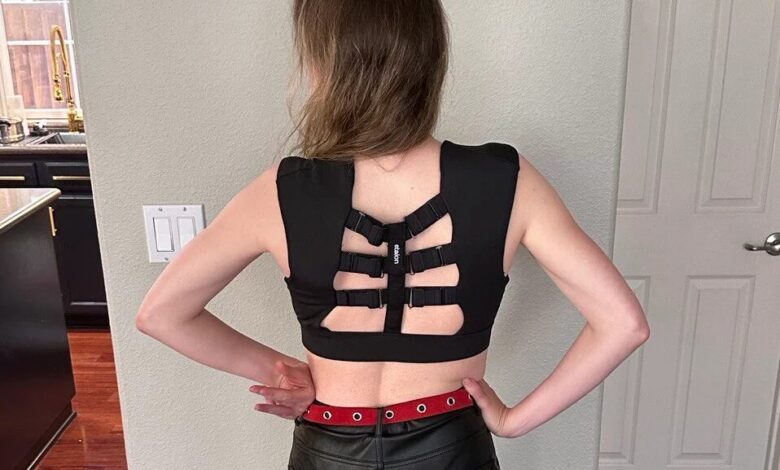
A posture corrector bra is a supportive bra with a reinforced back panel and cross-back or angled straps that gently draw the shoulders back while it holds the bust. It will not fix your spine on its own, but it can remind your upper back to stay open, take some load off tired shoulders, and make clothes hang better, which is where much of the confidence boost comes from. This guide explains how these bras work, who tends to benefit, how to pick one that fits, and how to wear it so the good habits stick.
What a posture corrector bra actually is
Most bras are built around the cups: the band anchors them, the straps fine-tune lift, and the back is often little more than a thin strip with a hook. Posture bras shift some of that engineering to the back. You will usually see a wider band, a firmer panel between the shoulder blades, and straps that cross or angle toward the center of the back instead of running straight up and over.
That geometry matters. When the straps meet or cross behind you, tension pulls the shoulders slightly back and down rather than simply up. Many designs also close in the front, which makes them easier to put on if you have stiff shoulders, and they tend to use less stretchy material in the back so the support does not fade after an hour. Well-made posture bras combine this with soft cups and wide, padded straps, so they feel like a supportive everyday bra rather than a medical brace.
How it differs from a standalone posture brace
Figure-eight braces and back straps sold as posture correctors are separate devices worn over or under clothing. They can pull harder, which some people find uncomfortable or bulky under a blouse. A posture bra replaces a garment you already wear, so it tends to get used every day. The trade-off is that the correction is gentler, which is usually a good thing: the goal is a cue to sit and stand well, not a device that holds you rigid.
Why posture shapes how you look and feel
Rounded shoulders and a forward head position are common among people who spend hours at a laptop or looking down at a phone. Over time the chest muscles tighten, the muscles between the shoulder blades get lazy, and slumping starts to feel normal. The result can be neck and upper-back tension, and it changes your outline: the chest collapses a little, the waist looks shorter, and tops pull or gape in odd places.
There is also a social side. People tend to read an open, upright stance as relaxed and self-assured. Research on whether posture directly changes your mood has produced mixed results, so it is fair to be skeptical of big promises. What most people notice in practice is simpler: when your shoulders are not aching and your clothes sit right, you stop fidgeting and thinking about your body, and that comes across as confidence.
Benefits you can realistically expect
A cleaner silhouette under clothes
When the shoulders sit back and the bust is lifted from a stable band, the line from collarbone to waist looks longer. Button-up shirts gape less, fitted knits drape more evenly, and structured jackets sit on the shoulders the way the tailor intended. This is the most immediate change most wearers see in the mirror.
Less strain on the shoulders
With a conventional bra, much of the weight of the bust hangs from thin straps, which can dig grooves into the shoulders. A firm band and wider straps spread that load across more of the back. People with fuller busts often find this the biggest benefit, since the band (not the straps) should carry most of the support.
A reminder that builds a habit
The gentle tension across the back acts as a physical cue. When you start to slump, you feel the straps, and you sit up. Repeated through the day, that cue can help you become more aware of how you hold yourself. It works best when you pair it with a few strengthening exercises, covered below, so the muscles can do the job without help.
What it will not do
A bra cannot treat scoliosis, a herniated disc or a structural curve, and it is not a replacement for physical therapy. If you have persistent back or neck pain, numbness or tingling in your arms, or pain that gets worse at night, see a doctor or physical therapist before relying on any posture product.
Posture bra vs other options
| Option | Support level | Best for | Drawbacks |
|---|---|---|---|
| Posture corrector bra | Moderate, all day | Daily wear, rounded shoulders, fuller busts | Needs careful sizing; gentler correction |
| Standard underwire bra | Bust support only | Shaping and lift | Little effect on shoulder position |
| Wire-free or bralette | Light | Lounging, smaller busts, comfort | Minimal back support |
| Standalone posture brace | Stronger, short sessions | Brief reminders at a desk | Bulky, can chafe, easy to over-rely on |
| High-support sports bra | High, during activity | Running, high-impact training | Too compressive for all-day wear |
If comfort is your top priority on lighter days, our guide to the comfort and convenience of wire-free bras explains when a softer style makes more sense.
Who is most likely to benefit
- Desk workers: anyone who spends long stretches at a computer and catches themselves hunching by mid-afternoon.
- People with fuller busts: a wide band and cross-back straps can relieve strap digging and upper-back fatigue.
- New parents: feeding and carrying a baby pull the shoulders forward for hours each day.
- People who stand all day: retail, hospitality and healthcare workers often find extra back support helps late in a shift.
- Anyone rebuilding posture habits: the bra works well as a cue while you strengthen the upper back.
How to choose the right posture corrector bra
Get your band size right first
The band does most of the work, so a loose band defeats the purpose. It should sit level around your ribcage and feel snug on the loosest hook when new, since bands relax with washing. If the back rides up, the band is too big. If you have not been measured in a while, measure snugly under the bust and compare with the brand’s chart instead of assuming your old size.
Check the strap design and adjustability
Look for straps that are at least moderately wide and adjustable, ideally with cushioning where they cross the shoulder. Cross-back or racerback styles give the most noticeable pull. Test by rolling your shoulders forward: you should feel a light, even tension, not a sharp pinch under the arms.
Pay attention to fabric and closures
Breathable fabrics with some moisture control matter if you plan to wear the bra for 8 to 10 hours. Front closures are easier with limited shoulder mobility. Smooth seams and a low profile back help it disappear under fitted tops.
Consider cost and care
Posture bras generally cost more than basic everyday bras because of the extra structure, often somewhere in the range of a mid-priced to premium bra. Having two in rotation lets each one rest between wears, which helps the elastic last. Hand wash or use a mesh bag on a gentle cycle and air dry; heat from a dryer breaks down the elastic that provides the support. Brands such as Etalon focus specifically on this category, which can make sizing and style choices easier than hunting through general lingerie ranges.
How to wear it so the results last
Start with a few hours a day for the first week, then build up. Your upper back may feel slightly tired at first as it gets used to a new position, which is normal; sharp pain is not. Pair the bra with small daily habits:
- Set up your workspace: raise your screen so the top is near eye level and keep your keyboard close enough that elbows stay by your sides.
- Strengthen the back: band pull-aparts, rows and wall angels, two or three times a week, build the muscles that hold your shoulders back.
- Stretch the chest: a doorway stretch for 30 seconds a few times a day eases the tight muscles that pull you forward.
- Take movement breaks: stand up and roll your shoulders every 30 to 45 minutes.
If you are training for a sport or recovering from a strain, a physiotherapist can give you a targeted plan; our article on sports physiotherapy for athletic performance explains what that support looks like.
Styling a posture bra across your week
For work, a smooth, nude-to-you shade under light shirts is the most versatile choice, and the improved shoulder line helps blazers and tailored dresses look sharper. On weekends, a posture bra with a racerback cut pairs well with tanks and T-shirts. For lighter workouts such as walking, Pilates or yoga, many posture bras are comfortable enough to keep on, though high-impact training still calls for a dedicated sports bra. For events, check necklines: halter and strapless styles will not work with cross-back straps, but square, scoop and crew necklines usually do.
For more wardrobe ideas, browse the rest of our Fashion section.
This article is general information, not medical advice. If you have ongoing back, neck or shoulder pain, speak with a qualified health professional.
Frequently asked questions
Do posture corrector bras really work?
They work as a supportive cue and can ease shoulder strain, especially for fuller busts. They do not permanently change posture on their own; lasting improvement comes from pairing the bra with back-strengthening exercises and better daily habits.
How long should I wear a posture bra each day?
Start with two to four hours a day in the first week and build up to a normal full day as long as it feels comfortable. Stop and adjust the fit if you feel pinching, numbness or sharp pain.
Can I sleep in a posture corrector bra?
It is generally not recommended. Your back muscles are not holding posture while you sleep, and a structured band can be uncomfortable lying down. A soft sleep bra or none at all is usually better overnight.
Is a posture bra good for large busts?
Often, yes. A wide, firm band and cross-back straps spread the weight across the back instead of the shoulders, which many people with fuller busts find more comfortable than a standard bra.
How do I know if my posture bra fits?
The band should sit level and snug on the loosest hook, the cups should be smooth with no spillage or gaps, and the straps should apply light, even tension without digging in. If the back rides up, go down a band size.