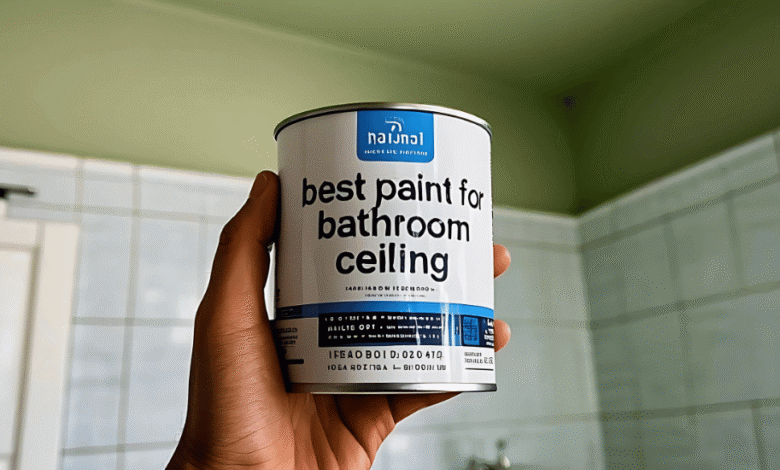
The best paint for a bathroom ceiling is a mildew-resistant acrylic (water-based) paint made for high-humidity rooms, usually in a satin or specialty bathroom matte finish, applied over a stain-blocking or mildew-resistant primer. Products such as Zinsser Perma-White and Benjamin Moore Aura Bath & Spa are popular because they are formulated to resist moisture and mold growth on the paint film. Just as important as the can you buy: good ventilation and proper preparation.
This guide compares paint types and finishes, lists well-known bathroom paints, walks through painting a ceiling step by step and explains how to keep it from peeling or growing mildew again.
Why bathroom ceilings need special paint
Warm, moist air from showers rises, so the ceiling gets more condensation than any other surface in the bathroom. Ordinary flat ceiling paint absorbs that moisture, which leads to peeling, bubbling, brown water stains and gray or black mildew spots, often in the corners above the shower. A bathroom-rated paint helps in three ways:
- Mildewcides in the formula inhibit mold and mildew growth on the paint surface.
- A tighter paint film resists moisture penetration and stands up to occasional wiping.
- Better adhesion when used over the right primer, so it is less likely to peel in humid conditions.
No paint makes a ceiling waterproof or kills existing mold growing behind it. Paint slows the problem; ventilation and fixing leaks solve it.
Choosing the right finish
Finish (sheen) affects both moisture resistance and appearance. Glossier finishes shed moisture better but show every bump and roller mark on a ceiling, where light hits at a low angle.
| Finish | Moisture resistance | Hides flaws | Best for |
|---|---|---|---|
| Flat (standard ceiling paint) | Low | Excellent | Not recommended in bathrooms with showers |
| Bathroom-specific matte | Good | Very good | Ceilings where you want a flat look |
| Eggshell | Moderate | Good | Half baths and well-ventilated rooms |
| Satin | Good | Fair | Most full bathrooms, a good all-round choice |
| Semi-gloss | Very good | Poor | Small, steamy bathrooms with smooth ceilings |
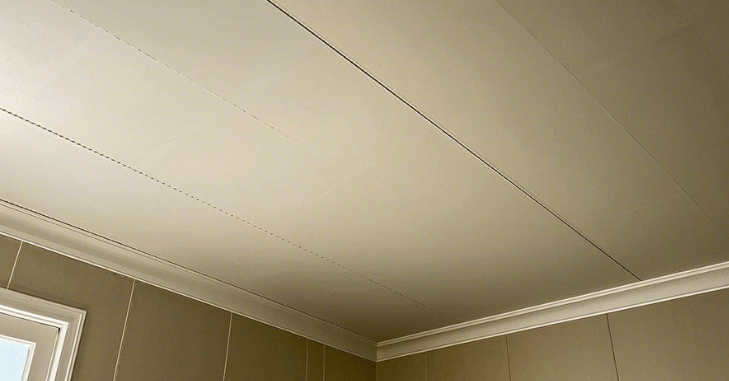
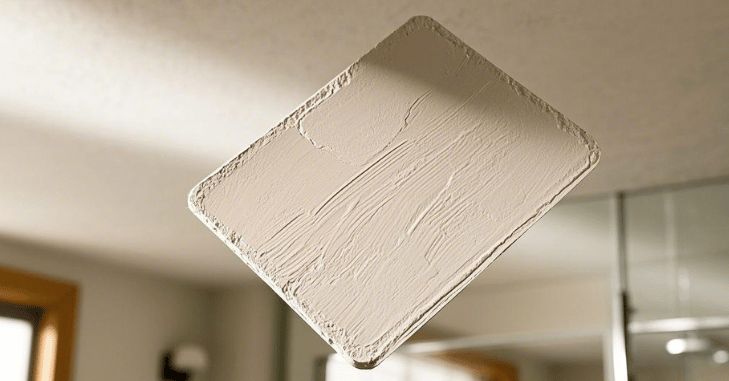
If your ceiling is textured or has patched areas, a bathroom matte or satin is usually the better compromise. Reserve semi-gloss for very smooth ceilings in rooms that get heavy steam.
Types of paint for bathroom ceilings
1. Mildew-resistant acrylic latex
This is the default choice for most homes. It is water-based, low in odor, dries in an hour or two, cleans up with soap and water and stays flexible, so it resists cracking as the room heats and cools. Look for labels such as “kitchen and bath,” “mildew-resistant” or “for high-humidity areas.”
2. Specialty mold and mildew-resistant paint
These products carry a stronger mildew-resistance claim and often come with a warranty against mildew on the paint film. They are worth it in bathrooms that have had recurring spots, windowless rooms and basement bathrooms.
3. Water-based enamel
Waterborne alkyd or acrylic enamels cure to a harder film than standard latex, closer to oil-based durability without the fumes. They are better suited to trim and doors than to large ceiling areas, but they can work on smooth ceilings in heavy-use bathrooms.
4. Oil-based paint
Oil-based paint is tough and moisture-resistant, but it yellows over time, has strong fumes, needs mineral spirits for cleanup and can become brittle. For ceilings, it is now mostly used as a stain-blocking primer rather than a topcoat. Latex paint can go over oil-based paint only after proper sanding and priming.
Well-known paints for bathroom ceilings
Formulas and names change, so check the current label and product data sheet before buying. These are widely available options that are commonly used in bathrooms:
| Product | Why people choose it | Keep in mind |
|---|---|---|
| Zinsser Perma-White Mold & Mildew-Proof Interior | Strong mildew resistance, self-priming on many surfaces | Limited color range compared with standard paints |
| Benjamin Moore Aura Bath & Spa | Matte finish designed for humid rooms, good for ceilings | Premium price |
| Sherwin-Williams Duration Home | Durable, washable, with mildew-resistant film | Pricier unless bought on sale |
| Behr Premium Plus (in satin or semi-gloss) | Widely available, good value, mildew-resistant finish | Check sheen options for ceiling use |
| Valspar and PPG bathroom-rated lines | Solid mid-range choices | Product names vary by retailer |
Budget: Expect roughly $30 to $90 per gallon depending on brand and line. A gallon typically covers about 350 to 400 square feet per coat, so a standard 5 by 8 foot bathroom ceiling needs well under a gallon for two coats. A quart or two of primer is usually enough for spot-priming stains.
How to paint a bathroom ceiling, step by step
Tools and materials
- Bathroom-rated paint and a mildew-resistant or stain-blocking primer
- Roller frame, 3/8 to 1/2 inch nap cover, extension pole and tray
- Angled 2 to 2.5 inch brush for cutting in
- Painter’s tape, drop cloths, spackle, fine sandpaper and a sturdy step ladder
- Gloves, eye protection and a mask for sanding or cleaning mildew
Step 1: Clean and treat mildew
Wash the ceiling with a mild detergent solution. For mildew spots, use a commercial mildew cleaner or a diluted bleach solution as directed on the product label, with the window open and fan running, then rinse and let it dry completely. Never mix bleach with ammonia or other cleaners. Painting over live mildew almost guarantees it will come back through the new coat. If the mold covers a large area or keeps returning, the source may be inside the ceiling; our guide to finding free mold testing explains when to get it checked.
Step 2: Repair and sand
Scrape off any peeling paint, fill cracks and holes with spackle, and sand the repairs smooth. Lightly scuff glossy existing paint so the new coat can grip. Wipe away dust with a damp cloth.
Step 3: Prime
Use a stain-blocking primer over water stains (shellac or oil-based primers block them best) and a mildew-resistant primer over repaired or bare areas. If the whole ceiling is sound and you are using a self-priming bathroom paint, spot-priming may be enough. Let the primer dry fully.
Step 4: Cut in, then roll
Brush a 2 to 3 inch band around the edges, light fixtures and vent. Then roll the main area in overlapping sections while the edges are still wet, which avoids visible lines. Work away from the window so you can see missed spots. Two thin coats are better than one heavy one, which can sag or drip.
Step 5: Let it cure before showering
Paint may feel dry in an hour, but it takes longer to cure. Follow the label; many bathroom paints advise waiting at least a day or more before exposing the ceiling to steam. Keep the fan running and the door open while it dries.
Keeping a painted bathroom ceiling in good shape
- Size the exhaust fan properly. A common rule of thumb is about 1 CFM of fan capacity per square foot of floor area for typical bathrooms. Make sure it vents outdoors, not into the attic.
- Run the fan during and after showers, ideally for about 20 minutes. A timer switch makes this automatic.
- Wipe condensation or small spots early with a mild cleaner rather than scrubbing hard.
- Seal gaps around light fixtures and vents so moist air does not reach the ceiling cavity.
- Watch for water stains, which can signal a leak from a bathroom or roof above. Fix the leak before repainting.
Common mistakes to avoid
- Using standard flat ceiling paint in a shower room.
- Painting over mildew or damp surfaces.
- Skipping primer over water stains, which then bleed through.
- Choosing high gloss on a textured or patched ceiling.
- Showering the same evening you painted.
If you are painting walls at the same time, many of the same principles apply; see our tips on what to consider when repainting walls. And if the ceiling is part of a larger refresh, our roundup of kitchen and bathroom remodeling trends covers colors, fixtures and ventilation upgrades worth planning together.
Frequently asked questions
What is the best paint finish for a bathroom ceiling?
Satin is a good all-round choice. A bathroom-specific matte works well if you want a flat look, and semi-gloss suits very smooth ceilings in steamy rooms.
Can I use regular ceiling paint in a bathroom?
It is fine in a powder room without a shower, but in full bathrooms standard flat ceiling paint tends to absorb moisture, peel and grow mildew.
Do I need primer on a bathroom ceiling?
Use primer over water stains, repairs, bare drywall or glossy old paint. A stain-blocking primer stops stains bleeding through the new coat.
How long should paint dry before I shower?
Follow the label, but plan on at least a day, and longer if possible, before exposing fresh paint to steam.
Will mold-resistant paint stop mold completely?
No. It resists mildew on the paint surface, but you still need good ventilation and to fix any leaks or moisture sources.


