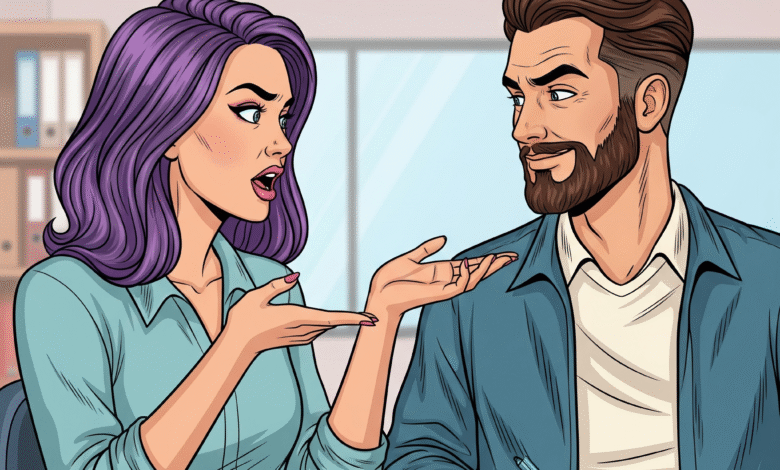
“Squabble up” is slang for getting ready to fight, or actually fighting, usually with fists rather than words. It works a lot like “square up” or “put your hands up,” and it became widely known after Kendrick Lamar used it as the title of a song on his 2024 album GNX. In older, more standard English, “squabble” simply means a noisy, petty argument, so the phrase can also be heard as a playful way of saying “start bickering.” Which meaning someone intends depends almost entirely on who is talking and where.
What does “squabble up” mean?
There are really two meanings in circulation, and it helps to keep them apart.
- Slang meaning (most common today): to fight, to get into a physical scrap, or to show you are ready to fight. “If he keeps talking, we’re gonna squabble up” means a fight is about to happen.
- Standard English reading: to start a squabble in the dictionary sense, a loud but trivial quarrel. “The kids squabbled up over the remote” means they started arguing, not throwing punches.
The slang sense comes from African American Vernacular English and hip-hop culture, where “a squabble” has long meant a fistfight rather than an argument. In that usage it often implies a fair, one-on-one fight with no weapons, which is why people sometimes say someone “can squabble,” meaning they can handle themselves in a fight.
Where the phrase comes from
The word “squabble” has been in English since the early 1600s. Dictionaries generally describe it as probably imitative (it sounds like the noise of a quarrel), possibly related to similar words in Scandinavian dialects. For most of its history it meant a minor, noisy dispute: siblings over a toy, neighbors over a fence, politicians over a budget line.
Adding “up” is a very common move in informal English. The particle can signal starting something (“start up,” “fire up”), squaring off (“square up,” “line up”) or intensity (“hype up”). “Squabble up” borrows especially from “square up,” the older phrase for taking a fighting stance. Put together, it means getting into fighting position or getting into the fight itself.
The Kendrick Lamar connection
For many people the phrase arrived through music. A snippet of the song was teased at the end of the video for “Not Like Us” in the summer of 2024, and the full track, titled “squabble up” in lowercase, was released on Kendrick Lamar’s album GNX in November 2024. It built on a sample of Debbie Deb’s 1980s freestyle hit “When I Hear Music” and became one of the album’s biggest early songs, debuting at No. 1 on the Billboard Hot 100.
In the song the phrase carries the confrontational, ready-to-fight meaning, set against a West Coast party beat. That mix of swagger and dance energy is a big part of why the phrase spread so fast on social media, in captions, workout videos and sports clips.
How “squabble up” is used, with examples
Because the phrase has two meanings, the surrounding words usually tell you which one is meant. Here are typical uses of the slang sense:
- “They were talking trash all game, and by the fourth quarter both benches wanted to squabble up.” (a fight is brewing)
- “Don’t squabble up with him, he’s not worth the suspension.” (advice to avoid a fight)
- “He’s quiet, but trust me, he can squabble.” (he can fight)
- “Coach told us to squabble up on defense tonight.” (figurative: play tough and physical)
And here is how the standard, argument sense tends to appear:
- “My roommates squabbled up about the dishes again.”
- “The group chat squabbled up over where to eat, then everyone ordered pizza anyway.”
Notice that the figurative sports use (example 4) is increasingly common. Commentators and fans use “squabble up” to mean competing with intensity, playing physical or refusing to back down, without any actual fighting.
Squabble up vs. similar phrases
| Phrase | Typical meaning | Tone |
|---|---|---|
| Squabble up | Get ready to fight, or fight; sometimes just argue | Slang, casual, confrontational |
| Square up | Take a fighting stance; face someone directly | Informal, widely understood |
| Throw hands | Fight with fists | Slang, playful or serious |
| Scrap | A fight, or to fight | Informal |
| Squabble (standard) | A petty, noisy argument | Neutral, dictionary English |
| Bicker | Argue repeatedly over small things | Neutral |
| Have a spat | Brief minor quarrel | Neutral, mild |
If you want the argument meaning without any risk of sounding like you mean a fistfight, “bicker,” “have a spat” or plain “argue” are safer choices.
When to use it (and when not to)
“Squabble up” is firmly informal. It fits text messages, social posts, music and sports talk, and casual conversation with people who know the slang. It does not belong in school essays, work emails or anything formal. A few practical tips:
- Know your audience. To people who know the slang, it means fighting. To someone who only knows the dictionary word, it may sound like a cute phrase for arguing. That gap can cause real misunderstandings.
- Be careful with threats. Telling someone you want to “squabble up” can read as a genuine threat, especially in writing where tone is lost. At school or work, that can carry consequences even if you were joking.
- Respect where it comes from. Like much slang, it grew out of Black American speech and hip-hop. Using it is fine, but using it awkwardly or mockingly tends to land badly.
Slang like this often travels through specific communities and scenes. If you are curious how names and labels shift meaning depending on context, our explainer on the difference between a frat and a gang looks at a similar question from another angle.
Why a phrase like this spreads so fast
Songs are one of the fastest ways slang moves from a local scene into mainstream use. A catchy title repeated in a hook, paired with short video clips, can put a phrase in front of millions of people in a few weeks. The same thing has happened with many rap-born terms that are now used in sports broadcasts and marketing. Rappers who build a following online, such as those covered in our guide to DD Osama, often push new vocabulary into wider use this way.
The downside is that meanings can blur as a phrase spreads. That is exactly what has happened with “squabble up”: people who first saw it in a caption sometimes assume it means “argue,” while people who grew up with the slang know it means fight. If you are unsure, the context (who said it, and whether anyone is angry) is the best guide.
Common mistakes people make with “squabble up”
A few errors come up again and again when people try the phrase for the first time:
- Using it for a polite disagreement. Saying “my boss and I squabbled up in the meeting” may make listeners think the two of you nearly came to blows. For a work disagreement, “we disagreed” or “we went back and forth” is clearer.
- Treating it as a noun. “Squabble up” is a verb phrase. The noun is simply “a squabble,” as in “there was a squabble in the parking lot.”
- Overusing it in writing. Slang loses its punch when it appears in every sentence, and in captions it can come across as trying too hard.
- Misspelling the song title. If you are referring to the Kendrick Lamar track, it is stylized in lowercase as “squabble up,” matching the rest of the GNX tracklist.
Getting these right mostly comes down to the same rule that applies to any slang: use it where it fits naturally, and switch to plain English when the stakes are higher.
A quick guide for parents and teachers
If you hear a teenager say “squabble up,” it is usually one of three things: they are quoting or singing the Kendrick Lamar song, they are joking around with friends, or they are describing a real fight or the threat of one. The first two are harmless. The third is worth a calm follow-up question. Asking “Was that a joke or is something going on?” is usually more useful than banning the phrase, which tends to make it more appealing.
Frequently asked questions
What does squabble up mean in slang?
In slang, “squabble up” means to get ready to fight or to get into a fight, usually a fistfight. It is close in meaning to “square up.”
Is squabble up the same as squabble?
Not quite. In standard English a squabble is a petty argument. In slang, especially in African American Vernacular English, a squabble is a fight, so “squabble up” usually means fighting rather than arguing.
Who made the song “squabble up”?
Kendrick Lamar released “squabble up” on his album GNX in November 2024. A snippet had appeared earlier at the end of his “Not Like Us” video.
Is it OK to say squabble up at school or work?
It is best avoided in formal settings. Because it can mean a fight, it may be read as a threat, even if you meant it as a joke.
What is a polite alternative to squabble up?
If you mean arguing, use “bicker,” “argue” or “have a disagreement.” If you mean competing hard in sports, “play tough” or “compete” works without the fighting connotation.