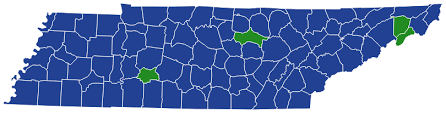
Tennessee is somewhat more diverse than Indiana, but both states sit well below the national average on the U.S. Census Bureau’s diversity index. In the 2020 Census, Tennessee scored roughly in the mid-40s and Indiana a few points lower, around 40, compared with about 61 percent for the country as a whole. Tennessee’s lead comes mainly from its larger Black population, concentrated in Memphis and Nashville, while Indiana has a slightly larger Hispanic share and one of the most distinctive refugee communities in the Midwest.
Here is what the index measures, how the two states compare, and where their diversity is concentrated, city by city.
How the diversity index works
The Census Bureau’s Diversity Index (DI) measures the chance that two people chosen at random from an area belong to different racial or ethnic groups. It runs from 0 to 100. A low score means most people belong to one group; a high score means the population is spread across several groups.
The calculation uses the census race and Hispanic origin categories: Hispanic or Latino, plus non-Hispanic White, Black, Asian, American Indian and Alaska Native, Native Hawaiian and Other Pacific Islander, some other race, and multiracial.
Some things to keep in mind:
- In states where one group is a large majority, as non-Hispanic White residents are in both Tennessee and Indiana, the index tends to be low even if cities are quite diverse.
- The index does not show national origin within a group. Kurdish, Burmese or Somali communities, for example, show up only as part of broad race categories.
- The 2020 Census used improved coding for race responses, which increased the multiracial count and raised scores nationwide.
Tennessee vs Indiana at a glance
These are rounded approximations from recent Census Bureau data, for comparison only.
| Measure | Tennessee | Indiana |
|---|---|---|
| Population | About 7 million or more | About 6.8 to 6.9 million |
| 2020 diversity index | Roughly mid-40s | Roughly 40 |
| Non-Hispanic White share | Around 70 percent | Around 75 percent |
| Black share | Around 16 percent | Around 9 to 10 percent |
| Hispanic or Latino share | Around 7 percent | Around 8 percent |
| Asian share | About 2 percent | About 2 to 3 percent |
| Main diversity hubs | Memphis, Nashville | Indianapolis, Lake County |
The takeaway: Tennessee’s larger Black population gives it the edge, while Indiana’s Hispanic and Asian shares are similar or slightly larger. Both states are growing, and both are gradually becoming more diverse.
Diversity in Tennessee
Tennessee is often described as three states in one: East, Middle and West Tennessee. Diversity follows that divide closely.
Memphis and West Tennessee
Memphis is a majority Black city, roughly six in ten residents, and one of the most important centers of Black history and culture in the South. It is where Martin Luther King Jr. was assassinated in 1968, now marked by the National Civil Rights Museum, and it gave the world a huge share of blues, soul and early rock and roll through Beale Street, Stax Records and Sun Studio. Shelby County also has a growing Hispanic population, especially in southeast Memphis.
Nashville and Middle Tennessee
Nashville has become one of the South’s most important immigrant destinations. It has the largest Kurdish community in the United States, centered around the “Little Kurdistan” area along Nolensville Pike, along with sizable Somali, Egyptian (including Coptic Christian), Mexican, Honduran, Guatemalan, Bhutanese and Burmese communities. Antioch and the Nolensville Pike corridor in southeast Nashville are among the most diverse parts of the state, with many languages spoken in local schools.
East Tennessee
Knoxville and Chattanooga have growing Black and Hispanic communities, but much of rural East Tennessee, part of Appalachia, remains overwhelmingly non-Hispanic White. Those counties pull the statewide score down.
Diversity in Indiana
Indiana’s diversity is concentrated in a few places: Indianapolis, the northwest corner near Chicago, and several manufacturing towns in the north.
Indianapolis and the Chin community
Indianapolis is Indiana’s most diverse city, with a large Black community and growing Hispanic and Asian populations. It is also home to one of the largest Burmese Chin communities outside Myanmar, with tens of thousands of residents on the south side, especially in Perry Township and Southport. Chin families began arriving in large numbers as refugees in the 2000s, and today the community has its own churches, grocery stores and community organizations.
Northwest Indiana
Lake County, across the state line from Chicago, is one of the most diverse counties in Indiana. Gary is majority Black, and East Chicago and Hammond have large Hispanic populations, many with Mexican and Puerto Rican roots tied to the steel industry.
Northern Indiana towns
Elkhart, Goshen and nearby towns have large Hispanic communities that grew with the RV and manufactured-housing industries. The same region, especially Elkhart and LaGrange counties, has one of the largest Amish populations in the country. The census counts Amish residents as White, but their language (Pennsylvania German) and way of life give the area a strong cultural identity that the diversity index does not capture.
Why Tennessee scores a little higher
- Tennessee’s Black population is roughly one and a half to two times larger as a share of the state.
- Memphis alone adds a large, majority Black metro area; Indiana has no metro area that is majority Black.
- Indiana’s somewhat larger Hispanic share narrows the gap, but not enough to close it.
- Both states have large, mostly White rural regions that keep statewide scores low.
What the numbers mean for residents
Low statewide scores can hide significant change at the local level. In Nashville and Indianapolis, school districts now serve students who speak dozens of home languages, and interpreters and translated materials have become routine in hospitals and government offices. Employers in both states, especially in manufacturing, logistics and healthcare, increasingly rely on immigrant and refugee workers. At the same time, many rural counties have seen little demographic change, which can create very different experiences of the same state.
How to check your own county’s score
If you live in either state, the statewide number probably tells you less than your county’s. A simple way to see local figures:
- Search the Census Bureau’s 2020 Census data visualizations for the diversity index map, which lets you zoom to any county.
- Compare your county with its neighbors. In Tennessee, Shelby and Davidson counties stand out; in Indiana, Lake and Marion counties do.
- Look at the race and Hispanic origin breakdown behind the score, since two counties with the same index can have very different mixes.
- Use American Community Survey five-year estimates for smaller towns, keeping the margins of error in mind.
Following local news in each state
Census numbers are a snapshot. To follow what is actually happening in communities, local news and press platforms are useful. Tennessee PR Local publishes news and releases from around Tennessee, helpful for tracking business openings, cultural festivals and community programs from Memphis to Knoxville.
For Indiana, Indiana PR Catalogs covers state news and announcements, useful for following organizations and events in Indianapolis, northwest Indiana and smaller cities.
When reading any diversity data, check whether it comes from the decennial census or the American Community Survey, which year it covers, and whether it describes the whole state or a specific county or city.
What to watch next
Middle Tennessee is one of the fastest growing regions in the country, and that growth is bringing more Hispanic, Asian and immigrant residents. Tennessee’s score is likely to keep rising, especially in the Nashville area. Indiana is growing more slowly, but Indianapolis and its suburbs, such as Fishers and Carmel, are becoming more diverse, partly because of South Asian professionals drawn by tech and healthcare jobs. The 2024 federal update to race and ethnicity standards will also change how the next set of scores is calculated.
For more comparisons, see Wisconsin vs Colorado, another Midwestern contrast, and Ohio vs Georgia, which pairs a Midwestern state with a Southern one. The rest of the series is in the Daily Bites category.
Frequently asked questions
Is Tennessee more diverse than Indiana?
Yes, slightly. Tennessee scored roughly in the mid-40s on the 2020 Census diversity index, compared with around 40 for Indiana. Tennessee’s larger Black population accounts for most of the difference.
What is the most diverse city in Tennessee?
Memphis and Nashville are the most diverse cities. Memphis is majority Black, while Nashville has the broadest mix of immigrant communities, including the largest Kurdish community in the United States.
Why do so many Burmese people live in Indianapolis?
Chin refugees from Myanmar began resettling in Indianapolis in the 2000s, and the community grew as families joined relatives and established churches, businesses and support networks.
What is the most diverse county in Indiana?
Lake County in northwest Indiana, which includes Gary, Hammond and East Chicago, is generally considered the most diverse, along with Marion County (Indianapolis).
Does the diversity index count Amish communities separately?
No. Amish residents are counted as White in census data, so their distinct language and culture do not affect the diversity index.