A ping test checks whether a device, server or website is reachable and measures how long data takes to travel there and back. You can run one in four simple steps: open an online ping tool (or your computer’s command line), enter an IP address or domain name, start the test, and read the results for response time and packet loss. Low response times with no lost packets mean a healthy connection; high times, lost packets or timeouts point to a problem worth troubleshooting.
This guide explains what ping is, the IP address basics you need, how to run a ping test online and from Windows, macOS or Linux, how to read the numbers, and what to do when the results look bad.
What is ping?
Ping is a basic network utility that sends small ICMP “echo request” packets to a target and waits for “echo reply” packets to come back. Its creator, Mike Muuss, named it after the sound of sonar, and the phrase “Packet Internet Groper” was attached later as a backronym. Each reply tells you two things: the target is reachable, and how many milliseconds (ms) the round trip took. The tool is built into almost every operating system and is one of the first things network technicians use when a connection misbehaves.
You may also see “ping” in internet speed tests and online games. There it means the same thing: latency, or the delay between your device and a server. Lower is better.
IP address basics for ping testing
An IP (Internet Protocol) address is a numeric label that identifies a device on a network so data can be sent to the right place. You can ping an IP address directly, or ping a domain name, in which case your computer first looks up the domain’s IP address through DNS.
Public vs. private IP addresses
- Public (external) IP: the address your internet provider assigns to your router. Websites and online services see this address.
- Private (internal) IP: the address your router assigns to each device on your home or office network, usually in ranges such as 192.168.x.x, 10.x.x.x or 172.16.x.x to 172.31.x.x. These are not reachable directly from the internet.
IPv4 vs. IPv6
IPv4 addresses look like 203.0.113.25 and allow roughly 4.3 billion unique addresses, which is not enough for today’s internet. IPv6 addresses are longer, written in hexadecimal such as 2001:db8::1, and provide a vastly larger pool. IPv6 was first specified in the late 1990s and has been rolling out steadily since, and most modern devices and networks support both. The ping command works with either.
How to find your IP address
- Public IP: search “what is my IP” in a search engine, or use an IP lookup tool, which usually also shows your approximate location and provider.
- Windows private IP: open Command Prompt and type
ipconfig. Look for “IPv4 Address” and “Default Gateway” (your router). - macOS: System Settings, then Network, then select your connection and view Details.
- iPhone: Settings, Wi-Fi, then tap the “i” icon next to your network.
- Android: Settings, Network or Connections, Wi-Fi, then tap your network (menu names vary by manufacturer).
How to run a ping test online in 4 simple steps
An online tool is the easiest option if you do not want to use the command line, and it lets you test a host from outside your own network. For example, you can use a web-based ping test tool like this:
- Step 1: Open the ping tool in your browser.
- Step 2: Type the IP address or domain name you want to test into the box.
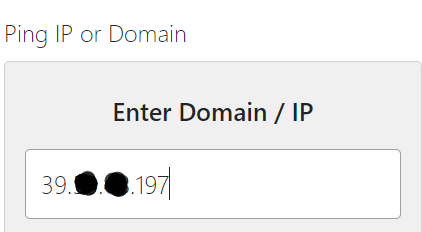
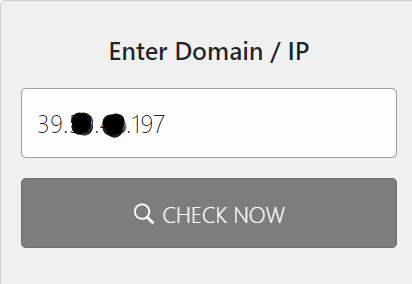
- Step 3: Click the button to start the test and wait a moment while packets are sent.
- Step 4: Read the results: whether the host responded, the response time for each packet, and the average.
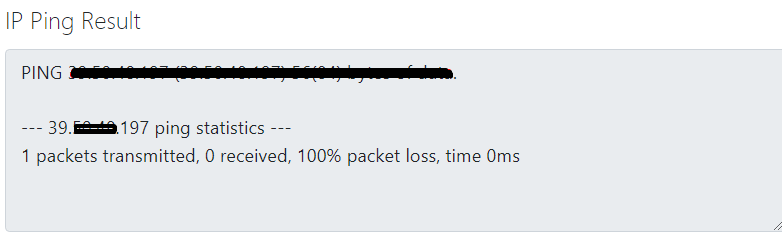
Keep in mind that an online tool measures the path from the tool’s server to the target, not from your own device. To test your own connection, use the command line method below.
How to run a ping test from your computer
Windows
- Press the Windows key, type
cmdand open Command Prompt. - Type
ping google.comand press Enter. Windows sends four packets by default. - Use
ping -n 20 google.comto send 20 packets, orping -t google.comto run continuously until you press Ctrl+C.
macOS and Linux
- Open Terminal.
- Type
ping -c 10 google.comto send 10 packets. Without-c, ping runs until you press Ctrl+C.
Phones
iPhones and Android phones do not include a visible ping command, but free network utility apps and online tools can run the test for you.
How to read ping results
A typical result shows a line for each reply with the time in ms, followed by a summary with packets sent, received and lost, plus minimum, average and maximum times. Use these rough guidelines:
| Average ping | What it usually means |
|---|---|
| Under 20 ms | Excellent, typical of wired connections to nearby servers |
| 20 to 50 ms | Good for gaming, video calls and streaming |
| 50 to 100 ms | Fine for browsing and streaming, noticeable in fast games |
| 100 to 150 ms | Noticeable lag in calls and games |
| Over 150 ms | Poor for real-time use, unless the server is far away |
- Packet loss: should be 0 percent. Even a few percent can cause choppy calls and game stutter.
- Jitter: big swings between minimum and maximum times suggest an unstable connection, often from Wi-Fi interference or congestion.
- “Request timed out”: no reply arrived. The host may be offline, the address may be wrong, or a firewall may be blocking ping.
- “Destination host unreachable” or “could not find host”: a routing or DNS problem, or a typo in the address.
Note that many servers deliberately ignore ping for security reasons, so a timeout does not always mean a site is down. Try loading it in a browser too.
Ping test vs. speed test
A speed test measures download and upload throughput in megabits per second and usually reports ping as a side figure. A dedicated ping test focuses only on latency, packet loss and reachability, and lets you choose the exact target. If video calls freeze while downloads seem fast, latency and packet loss are the more likely culprits, and a longer ping test of 50 to 100 packets will show them more clearly than a quick speed test.
Using ping to troubleshoot a slow or broken connection
Ping is most useful when you test in layers, moving outward from your device:
- Ping your router (the default gateway, often 192.168.0.1 or 192.168.1.1). If this fails or is slow, the problem is your device, cable or Wi-Fi.
- Ping a public IP such as a well-known public DNS server. If the router works but this fails, the issue is likely your modem or internet provider.
- Ping a domain name. If the public IP works but domains fail, you likely have a DNS problem.
- Run traceroute (
tracerton Windows,tracerouteon macOS and Linux) to see where along the path delays or losses start.
Common fixes include restarting your modem and router, moving closer to the router or using a wired Ethernet connection, closing bandwidth-heavy apps and downloads, updating router firmware, and contacting your provider if losses continue beyond your own network. If you use a VPN or proxy, test with it on and off, since routing through another server adds latency. This overview of how proxies affect security and efficiency explains the trade-offs.
Website owners can also use ping and uptime checks to confirm their servers respond. It is one part of keeping a site reliable, alongside basics such as domain name protection. For more guides like this, visit our tech section.
Frequently asked questions
What is a good ping speed?
Under 50 ms is good for most uses, including gaming and video calls. Under 20 ms is excellent. Above 100 ms you will usually notice lag in real-time apps.
Is ping the same as internet speed?
No. Ping measures latency, the delay of a round trip. Download and upload speed measure how much data moves per second. A fast connection can still have high ping, and the reverse.
Why does my ping test say “request timed out”?
No reply came back in time. The device may be offline, the address may be wrong, your connection may be down, or a firewall may be blocking ping requests.
How do I lower my ping?
Use a wired connection, restart your router, close background downloads, pick servers closer to you, and turn off a VPN if you do not need it. If high ping persists, contact your internet provider.
Is it safe to run a ping test?
Yes. Ping sends a handful of tiny packets and is a standard diagnostic tool. Only ping devices and servers you have a legitimate reason to test.