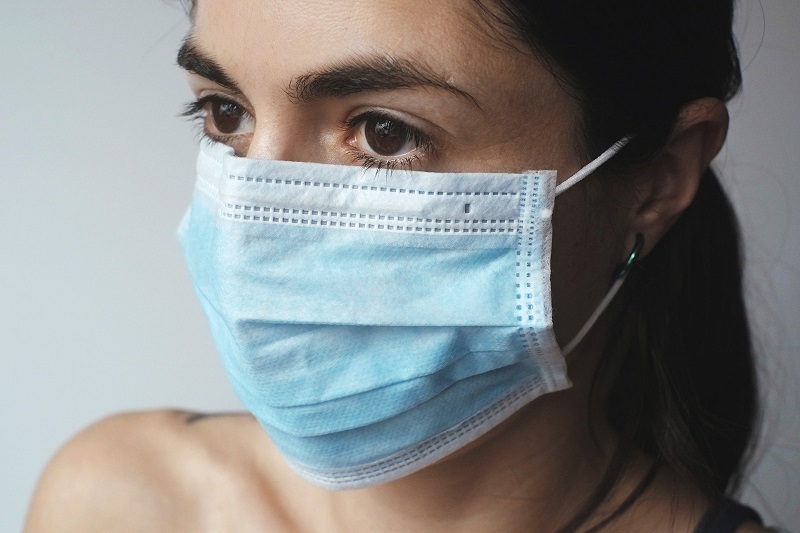
A disposable face mask is a single-use mask, most often a three-layer medical or “surgical” mask, designed to catch respiratory droplets from the wearer and offer some protection against splashes and larger particles. Disposable respirators such as N95, KN95 and FFP2 masks go further, filtering small airborne particles when they seal well to the face. Which one you need depends on the setting, the fit and the standard the mask is tested to, all of which this guide explains.
Why disposable masks are still widely used
Disposable masks became familiar to almost everyone during the COVID-19 pandemic, but they were standard equipment in hospitals, dental offices, labs and food production long before that, and they remain so. People still reach for them during cold and flu season, when caring for someone who is sick, on crowded public transport, during wildfire smoke events (with a respirator), and for dusty jobs around the home. Their appeal is simple: they are light, inexpensive per unit, and you use a fresh one each time.
The main types of disposable face masks
Medical or surgical masks
These flat, pleated masks usually have three layers: a water-resistant outer layer, a melt-blown filter layer in the middle and a soft inner layer. They fit loosely and are designed mainly to stop droplets from the wearer reaching others and to block splashes. Different regions grade them differently:
- United States: ASTM F2100 Levels 1, 2 and 3, with higher levels offering greater fluid resistance.
- Europe and the UK: EN 14683 Type I, Type II and Type IIR. Type I has a bacterial filtration efficiency (BFE) of at least 95 percent, Types II and IIR at least 98 percent, and Type IIR is also splash resistant.
- Australia: AS 4381 Levels 1, 2 and 3, broadly similar in approach to the US levels.
Disposable respirators (N95, KN95, FFP2, P2)
Respirators are designed to protect the wearer by filtering both larger droplets and smaller airborne particles, provided they seal tightly to the face. Common standards include NIOSH-approved N95 respirators in the US (filtering at least 95 percent of test particles), FFP1, FFP2 and FFP3 masks under the European EN 149 standard, KN95 masks under a Chinese standard, and P2 respirators in Australia and New Zealand. Many have a molded cup shape or fold-flat design and a nose wire for a better seal.
Some respirators have an exhalation valve. Valves make breathing out easier, but they can let unfiltered air escape, so they are not ideal when the goal is protecting other people.
Single-use non-medical masks
You will also see inexpensive disposable masks sold without a medical or respirator rating. These may be fine for general use, but their filtration and fit are unknown. If protection matters, choose a mask that states which standard it meets.
Comparing disposable mask options
| Mask type | Main purpose | Fit | Good for |
|---|---|---|---|
| Medical mask (Level 1 or Type I) | Source control, basic barrier | Loose | Everyday use, reception areas, general care |
| Medical mask (Level 2 or 3, Type IIR) | Barrier plus fluid resistance | Loose | Clinical and dental procedures with splash risk |
| N95, FFP2, P2 or KN95 respirator | Wearer protection from airborne particles | Tight seal | Higher-risk settings, caring for sick people, smoke |
| FFP3 respirator | Highest common filtration class | Tight seal | High-risk healthcare and industrial tasks |
| Unrated disposable mask | General covering | Varies | Low-risk everyday use |
Disposable vs reusable masks
Shoppers can find a wide range of both disposable face masks online and offline, from suppliers such as Oz Manufacturing as well as pharmacies and supermarkets. Here is how the two main categories compare:
- Cost: a reusable cloth mask costs more upfront but can be washed and reused, so it may be cheaper over time. Disposables cost little each but add up with daily use.
- Protection: tested medical masks and well-fitted respirators generally offer more consistent filtration than typical cloth masks, whose performance depends heavily on fabric and layers.
- Hygiene: disposables start clean every time, while reusables need proper washing and drying.
- Environment: disposables create waste, much of it plastic. Reusables create less, though washing has its own footprint.
Many people keep both: a reusable mask for low-risk situations and a box of disposables or respirators for times when better protection matters.
How to choose a good disposable mask
- Check the rating: look for the standard printed on the box or mask (for example ASTM F2100, EN 14683, AS 4381, NIOSH N95 or EN 149 FFP2).
- Buy from reputable sellers: counterfeit respirators have been a known problem. In the US, NIOSH publishes a list of approved respirators you can check.
- Prioritize fit: a mask with an adjustable nose wire and the right size for your face will leak less.
- Consider comfort: ear loops suit short wear; head straps usually seal better for respirators.
- Think about sizes: children’s masks are made in smaller sizes and should fit snugly without restricting breathing.
How to wear a disposable face mask correctly
- Clean your hands with soap and water or hand sanitizer before putting the mask on.
- Check which side faces out (usually the colored side) and which edge has the nose wire.
- Cover your nose, mouth and chin fully, then press the nose wire to shape it to your face.
- For respirators, do a quick seal check: breathe in and out and feel for air leaking around the edges.
- Avoid touching the front of the mask while wearing it.
- Replace the mask when it becomes damp, dirty or damaged.
- Remove it by the ear loops or straps, dispose of it in a closed bin, and clean your hands again.
Masks work best alongside other habits such as handwashing, staying home when sick and good ventilation. Our tips on enhancing home hygiene cover some of those everyday measures.
When a respirator makes more sense than a medical mask
A standard medical mask is fine for many everyday situations, but a well-fitted respirator is often the better choice when:
- You are caring for someone with a respiratory infection at home
- You are at higher risk of severe illness and spending time in crowded indoor spaces
- Wildfire smoke or heavy air pollution is affecting your area (medical masks do little against fine smoke particles)
- You are sanding, sweeping dusty areas or doing other jobs that create fine dust
In workplaces where respirators are required, employers typically need to provide fit testing and training. For home use, try a few models and sizes to find one that seals comfortably. People with heart or lung conditions should ask a doctor before wearing a respirator for long periods, since breathing through the filter takes more effort.
Common mistakes to avoid
- Wearing the mask below the nose
- Pulling it down to the chin between uses, which transfers contamination
- Reusing a disposable medical mask day after day
- Wearing a respirator with a beard that prevents a seal
- Storing loose masks in a pocket or bag where they get crushed or dirty
Storage and disposal
Keep unused masks in their original packaging in a cool, dry place away from direct sunlight, and check the expiry date, since elastic and filter materials can degrade over time. Used masks belong in the general trash in most homes, ideally in a closed bin. Cut the ear loops before throwing them out if you want to reduce the risk to wildlife. Most disposable masks are not accepted in household recycling.
For a look back at how digital health services adapted during the pandemic, see our article on HealthTap in the era of COVID-19.
This article is general information, not medical advice. Follow guidance from your healthcare provider and local public health authorities.
Frequently asked questions
How long can I wear a disposable face mask?
Replace a disposable mask when it becomes damp, dirty or damaged. For everyday use, many people use a fresh mask each day or more often if it gets wet.
What is the difference between a surgical mask and an N95?
A surgical mask fits loosely and mainly blocks droplets and splashes. An N95 is a respirator designed to seal to the face and filter at least 95 percent of small test particles.
What does Type IIR mean on a mask?
Type IIR is a European EN 14683 rating for medical masks with at least 98 percent bacterial filtration efficiency and added splash resistance.
Can I reuse a disposable face mask?
Disposable masks are designed for single use. Reusing them can reduce their fit and filtration and increase contamination risk.
Are disposable masks recyclable?
Most are not accepted in household recycling because they are made of mixed materials. Dispose of them in a closed trash bin.