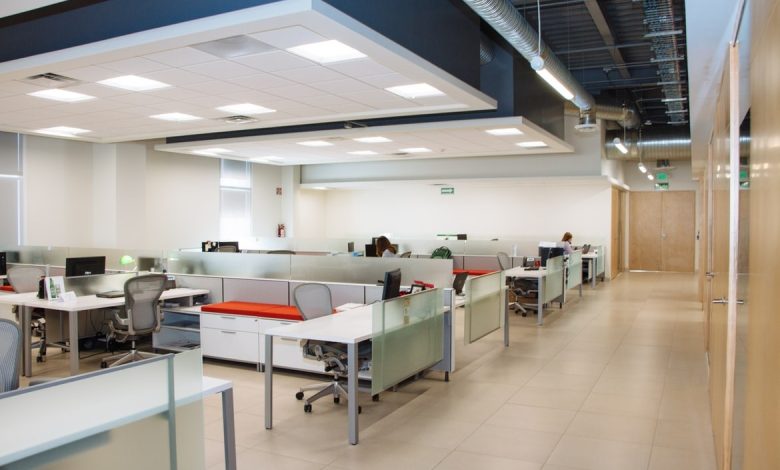
To buy modern office furniture that boosts your workspace’s aesthetics, start with a clear plan of how each area is used, put ergonomics and comfort first, choose a consistent colour and material palette, size pieces to the room so it still feels open, and make sure the style reflects your brand. Good-looking furniture that people find uncomfortable, or that crowds the floor, will not make an office feel better for long.
Below are practical tips for each of those steps, plus what to check on build quality, how to budget and how to work with a manufacturer, whether you are fitting out a new office in Pune or refreshing a workspace anywhere else.
1. Start with how your office actually works
Before looking at catalogues, walk through the space and list what happens in each zone. A typical office needs some mix of:
- Focused work: workstations or desks for individual tasks.
- Collaboration: meeting tables, huddle corners and a conference room.
- Private calls: phone booths or small enclosed rooms.
- Reception and waiting: the first impression for clients and candidates.
- Breakout and pantry: casual seating where people recharge.
- Storage: lockers, pedestals, filing and shared cabinets.
Count how many people use the office on a busy day, not just the headcount. With hybrid working, many teams need fewer fixed desks and more meeting and collaboration space. If you only need to fill gaps rather than furnish from scratch, modular pieces are a sensible choice because they can be added, reconfigured or moved as the team changes.
2. Put comfort and ergonomics first
People spend most of the working day in their chair and at their desk, so these deserve the largest share of attention and budget. Aesthetics matter, but a beautiful chair that causes back pain will be replaced within a year.
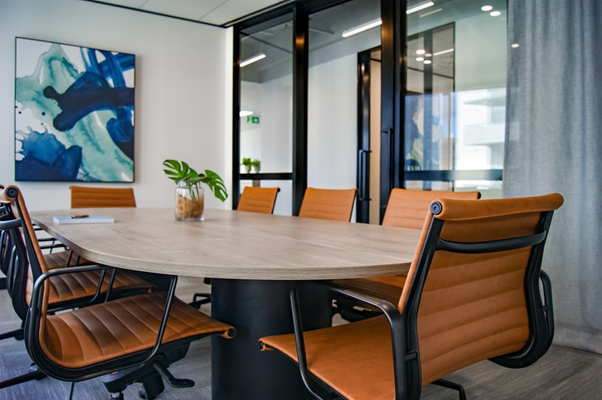
What to look for in an office chair
- Adjustable seat height so feet rest flat on the floor.
- Adjustable lumbar support for the lower back.
- Seat depth that leaves a small gap behind the knees.
- Height-adjustable armrests that let shoulders relax; fixed, too-high arms are the problem, not armrests themselves.
- Breathable mesh or fabric, which is more comfortable than leatherette in warm, humid weather.
- A stable five-star base with smooth castors suited to your floor.
Desks and workstations
Standard desk height is usually around 72 to 76 cm, which suits many people but not everyone. Height-adjustable or sit-stand desks solve this and let people change posture during the day. Allow enough depth, often 60 to 75 cm or more, for the monitor to sit about an arm’s length away with the top of the screen near eye level. Plan cable management (trays, grommets, vertical spines) from the start, because trailing wires spoil even the best-looking workstation.
3. Create a colour and material palette
A defined palette is the simplest way to make an office look designed rather than assembled piece by piece. A practical approach is the 60-30-10 rule: about 60 percent of the space in a neutral base colour (walls, large surfaces), 30 percent in a secondary colour or material (furniture, flooring), and 10 percent in an accent (chairs, cushions, a feature wall).
- Calm, focused areas: soft blues, greens, greys and natural wood tones.
- Creative or collaborative zones: brighter accents such as yellow, orange or your brand colour.
- Reception: your brand colours used with restraint, plus quality materials that photograph well.
Limit the number of wood finishes and metal finishes to two or three each, and ask for physical samples of laminates, veneers and fabrics so you can see them under your office lighting. Lighting also changes how colours read; warm, layered lighting in lounge areas can make a big difference, as our ideas for gold standing lamps show on a smaller scale.
4. Keep the space feeling open
Buying undersized furniture to squeeze in more desks usually backfires: cramped workstations are uncomfortable and make the whole office look cluttered. Instead, measure carefully and plan the layout before ordering.
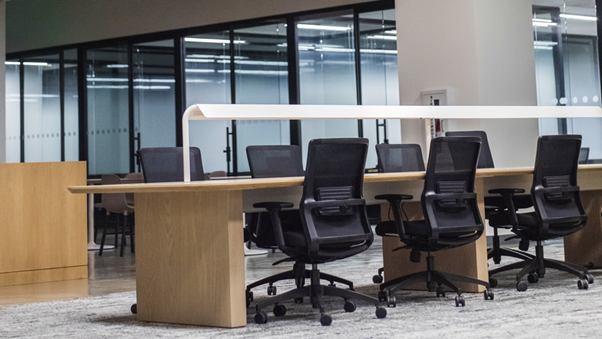
- Leave clear walkways, commonly around 90 cm to 1.2 m wide in main routes, and enough space behind chairs to push back and stand up comfortably.
- Choose low-height partitions or glass screens between workstations to keep sight lines and natural light.
- Use furniture with slim legs or raised bases so more floor is visible.
- Push storage up with tall cabinets and wall units rather than filling floor space with low cupboards.
5. Match the furniture to your brand and values
Office furniture tells visitors and employees something about the business. A law firm may want solid wood, deep colours and a formal meeting room. A technology startup might prefer bench workstations, bright accents and flexible lounge seating. A company that talks about sustainability should back that up with durable pieces, certified or reclaimed wood, recycled materials and suppliers who can explain where materials come from.
Modern vs. modular office furniture
| Aspect | Modular furniture | Fixed or custom-built furniture |
|---|---|---|
| Flexibility | Easy to reconfigure, extend or relocate | Designed for one layout |
| Lead time | Often shorter, uses standard components | Usually longer |
| Look | Clean and consistent | Can be fully unique |
| Moving offices | Can be dismantled and reused | May need to be left behind or rebuilt |
| Best for | Growing teams, rented offices | Reception desks, boardrooms, feature pieces |
Many offices mix the two: modular workstations and storage for flexibility, with a few custom pieces where they have the most visual impact.
Check build quality before you buy
- Board and core material: ask whether tops are particle board, MDF, plywood or solid wood, and what edge banding is used. Moisture-resistant boards are worth it in humid climates, including during the monsoon.
- Frames and hardware: look for steel frames of adequate thickness and branded hinges, drawer channels and locks.
- Chairs: ask about gas lift quality, weight rating and warranty on mechanisms.
- Warranty and service: get written warranty terms and confirm who handles repairs and replacements.
Do not forget acoustics
Modern offices with hard floors, glass and open layouts can get noisy, and noise undermines the calm look you are paying for. Furniture can help: upholstered booths and high-backed sofas absorb sound, fabric-covered desk screens reduce chatter between workstations, and acoustic panels can double as pinboards or decorative wall features in your accent colour. Rugs under meeting tables and lounge areas soften both sound and appearance. More from us: The Founder of Modern Expressionism.
How to budget sensibly
- Spend most on what people touch all day: chairs and desks.
- Spend for impact in a few visible places: reception and the main meeting room.
- Save on low-use items: occasional storage, pantry stools and back-office shelving.
- Phase the purchase: furnish essentials first and add lounge or breakout pieces once you see how the space is used.
- Think about lifetime cost: a sturdier piece that lasts many years often costs less over time than a cheaper one that needs replacing.
Working with a local manufacturer
Buying online is convenient for single items, but for a full fit-out it helps to see and sit on the furniture first. Visiting showrooms of furniture manufacturers in Pune, such as AP Interio, lets you test chairs, compare finishes and discuss modular workstation layouts with people who can measure your space. When comparing quotes, make sure each includes the same specifications, delivery, installation, taxes and timelines, and ask to see previous office projects. Plan orders several weeks ahead of your move-in date, since custom finishes and large quantities take time to produce.
If you are also setting up space at home for hybrid work, our guide to items to buy when starting a new home office covers the essentials on a smaller budget.
Frequently asked questions
What is modular office furniture?
It is furniture made from standard components, such as desks, panels and storage units, that can be combined, extended and rearranged as your team or layout changes.
Should office chairs have armrests?
Height-adjustable armrests are helpful because they support the forearms and let the shoulders relax. Fixed armrests set at the wrong height can cause strain or stop the chair sliding under the desk.
Which colours work best for office furniture?
Neutrals, soft blues and greens and natural wood tones suit focused work, while brighter accents work well in collaborative or breakout areas. A consistent palette matters more than any single colour.
How far in advance should I order office furniture?
For a full fit-out, allow several weeks, and longer for custom finishes or large orders. Confirm production and installation timelines in writing.
Is it better to buy office furniture online or from a showroom?
Online works for single items you already know. For chairs and full office setups, a showroom visit lets you test comfort and see finishes before committing.